Your Child’s Amazing Journey: A Guide to the 5 Areas of Development
Published: 3 Nov 2025
Have you ever watched your baby stare intently at their own hands, or seen your toddler try, with world-stopping concentration, to fit a square block into a round hole? It’s magical. But let’s be honest, it can also be a little nerve-wracking.
You see other kids on the playground or in your parent group, and the questions start bubbling up. Is my child talking enough? Should they be walking by now? Why do they love throwing food so much?
If you’ve ever felt a swirl of wonder and worry, you are not alone. It’s a universal part of being a parent. The good news is, you don’t need a PhD in child psychology to understand your little one. What you need is a map.
Think of child development not as a strict timeline, but as five key territories your child is exploring all at once. Sometimes they’ll sprint through one area and meander through another. Understanding these five areas helps you see the whole picture. It turns anxiety into awe and gives you a simple framework for celebrating every tiny, wonderful step of their journey.
So, let’s explore that map together.
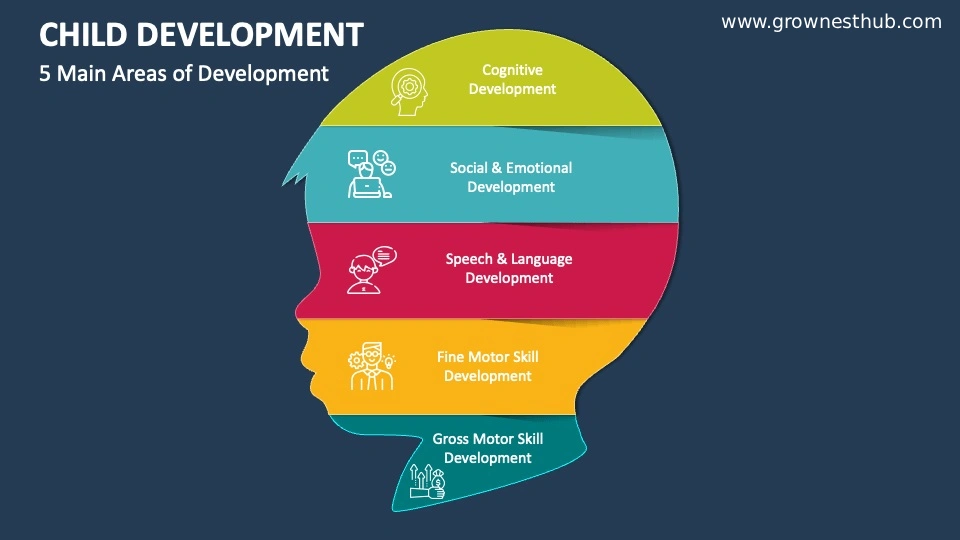
The 5 Core Areas of Child Development
Child development is a holistic process, meaning every part is connected. For decades, experts have used a simple framework to observe and support this growth. It breaks down into these five main areas:
- Cognitive Development (Thinking, Learning, Problem-Solving)
- Social and Emotional Development (Feeling, Connecting, Understanding Others)
- Speech and Language Development (Communicating, Listening, Understanding)
- Fine Motor Skill Development (Small Muscle Movements, Hand-Eye Coordination)
- Gross Motor Skill Development (Large Muscle Movements, Balance)
Let’s take a closer look at what each one really means for you and your child.
1. Cognitive Development: The Little Thinker
This is all about how your child’s brain works. It’s their ability to think, learn, remember, and solve problems. It’s the process of them making sense of the world. It starts with a newborn learning to recognize your face and eventually leads to a preschooler asking “Why?” for the hundredth time.
What It Looks Like:
- Infants (0-1 year): They learn about cause and effect (if I cry, someone comes!). They develop object permanence, the brilliant discovery that you still exist even when you’re playing peek-a-boo.
- Toddlers (1-3 years): They can follow simple instructions, imitate your actions (like “talking” on a toy phone), and begin to sort shapes and colors.
- Preschoolers (3-5 years): Their imagination explodes. They engage in pretend play, ask lots of questions, and can count and recognize some letters.
How You Can Help:
- Talk and Read: Narrate your day. “I’m putting on your red socks now.” Reading books together is one of the most powerful ways to build cognitive skills.
- Be Playful: Games like peek-a-boo, building blocks, and simple puzzles are brain-builders disguised as fun.
- Answer the “Whys”: As tiring as it can be, every “why?” is a sign their brain is trying to connect the dots. Give simple, honest answers.
2. Social and Emotional Development: The Little Heart
This area is the foundation for everything else. It’s about your child’s ability to understand their own feelings and the feelings of others. It includes forming secure relationships, learning to share and cooperate, and managing big emotions like frustration or excitement.
This is where your connection with them is most powerful. A child who feels safe and loved has a secure base from which to explore the world.
What It Looks Like:
- Infants (0-1 year): They smile at you, cry to show distress, and can show anxiety around strangers.
- Toddlers (1-3 years): The age of big feelings! They show affection, but also frustration. They start to show empathy, like patting a friend who is crying. They become more interested in playing alongside other children (parallel play).
- Preschoolers (3-5 years): They begin to take turns in games, show more complex emotions like pride, and start to build real friendships.
How You Can Help: The Power of “Serve and Return”
Here’s where we can borrow some incredible wisdom. Researchers at Harvard University’s Center on the Developing Child talk about a concept called “Serve and Return.” It’s one of the most important things you can do for your child’s brain development, and it’s beautifully simple.

Think of it like a game of tennis.
- The Serve: Your child “serves” by showing interest in something. They might point at a dog, babble, or make a facial expression.
- The Return: You “return the serve” by responding. You look at the dog and say, “Yes, look at that big, fluffy dog! He says ‘woof!'”
This back-and-forth interaction builds and strengthens the neural connections in your child’s brain that support social and emotional skills for life. It tells them, “I see you. You matter. We are connected.” So when your baby coos, coo back. When your toddler points, point with them. It’s that simple and that profound.
3. Speech and Language Development: The Little Communicator
This area is about more than just a child’s first words. It covers all the ways they communicate. This includes understanding what you say (receptive language) and using sounds, gestures, and eventually words to express their own needs and ideas (expressive language).
What It Looks Like:
- Infants (0-1 year): They start by cooing and babbling (“bababa”). They respond to their name and begin to understand simple words like “no” or “bye-bye.” They might use gestures like pointing or waving.
- Toddlers (1-3 years): They experience a word explosion! They go from a handful of words to putting together two-word sentences like “more milk.” They can also follow two-step commands (“Get your shoes and bring them to me”).
- Preschoolers (3-5 years): They can tell simple stories, sing songs, and speak in more complex sentences. They can say their name and age and are understandable to strangers most of the time.
How You Can Help:
- Chat Constantly: Talk, sing, and make silly sounds. The more language they hear, the more they absorb.
- Listen and Respond: When your child babbles or tries to say a word, make eye contact, smile, and respond. It encourages them to keep trying.
- Read, Read, Read: We mentioned it for cognitive skills, but it’s just as crucial here. Point to pictures and name them. Let your child turn the pages.
4. Fine Motor Skill Development: The Little Hands
Fine motor skills involve the small muscles in the hands and fingers working together with the eyes. These are the skills needed for precise movements, like picking up a single pea, scribbling with a crayon, or buttoning a coat.
These skills are essential for future independence and school readiness.
What It Looks Like:
- Infants (0-1 year): They go from batting at toys to purposefully grasping them. They bring their hands to their mouth and eventually develop the “pincer grasp” to pick up small things between their thumb and forefinger.
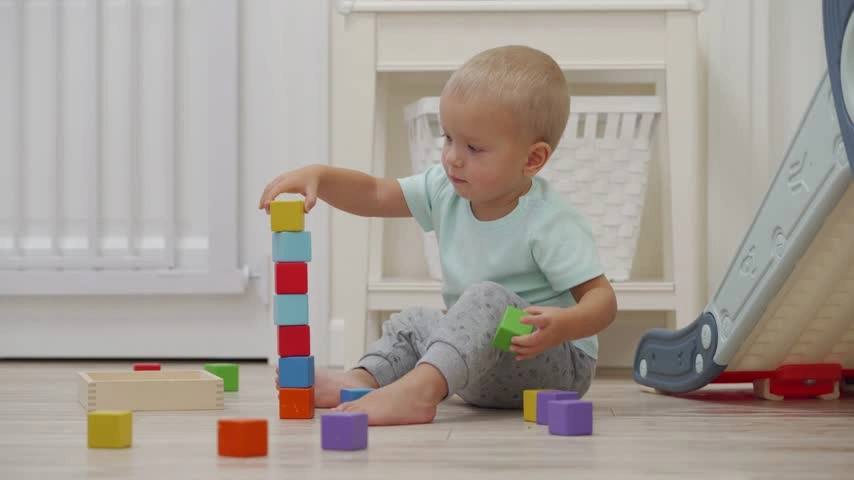
- Toddlers (1-3 years): They can stack a few blocks, scribble on paper, turn pages in a book, and begin to use a spoon.
- Preschoolers (3-5 years): They can draw shapes, use kid-safe scissors, get dressed with some help, and hold a crayon with a more mature grip.

How You Can Help:
- Creative Play: Provide opportunities to play with play-dough, finger paints, and large crayons.
- Practical Life Skills: Let them “help” you. Things like stirring batter (with supervision!), pulling stickers off a sheet, or trying to zip their own jacket are fantastic practice.
- Puzzles and Blocks: Simple wooden puzzles and blocks of any kind are perfect for developing hand-eye coordination.
5. Gross Motor Skill Development: The Little Mover
In contrast to fine motor skills, gross motor skills involve the large muscles in the body: the legs, arms, and torso. These are the skills for balance, coordination, and movement. It’s how your child learns to explore their environment on a larger scale.
What It Looks Like:
- Infants (0-1 year): They progress from lifting their head to rolling over, sitting up without support, crawling, and eventually pulling up to stand.
- Toddlers (1-3 years): They take their first steps, then learn to walk more confidently, run, and even kick a ball. They love to climb on everything.
- Preschoolers (3-5 years): They can run, hop, and jump with ease. They can ride a tricycle and throw a ball overhand.
How You Can Help:
- Tummy Time: For babies, supervised tummy time is critical for building neck and core strength.
- Create a Safe Space: Give them room to move. Whether it’s a living room with sharp corners padded or a trip to the local park, they need space to crawl, cruise, and toddle.
- Outdoor Play: Running in the grass, climbing on a playground structure, and dancing to music are all brilliant ways to build those large muscle groups.
The Big Picture: They All Work Together
Here is the most important part: these five areas don’t operate in isolation. They are constantly overlapping and influencing each other.
Think about a child drawing a picture.
- They need cognitive skills to decide what to draw.
- They need fine motor skills to hold the crayon.
- They might use speech and language to tell you about their drawing.
- They used gross motor skills to walk over to the table and sit down.
- And they feel socially and emotionally connected when you praise their beautiful creation.
See? It’s all one beautiful, messy, interconnected process. It’s also fascinating to see how culture affects child development, shaping which skills are emphasized and how children learn.
A Gentle Word on Milestones
It’s easy to get caught up in developmental milestones. You might see a chart and feel a jolt of panic if your child isn’t doing something by a certain age.
Please remember that these are guidelines, not deadlines. Every child truly does develop at their own pace. The CDC’s “Learn the Signs. Act Early.” program is a fantastic resource, and they recently updated their milestones to reflect what 75% or more of children can do by a certain age, helping to reduce unnecessary worry.
Development is not a race. These five areas simply give you a lens to appreciate the incredible work your child is doing every single day.
Common Questions from Parents
What if my child seems behind in one area?
First, take a breath. A slight delay in one area is very common. The best first step is to talk to your pediatrician. They have seen thousands of kids and can offer perspective, screen for any potential issues, and connect you with resources like early intervention services if needed. You are your child’s best advocate.
What’s the difference between “areas” and “stages” of development?
That’s a great question. The five “areas” are the different types of skills your child is learning (cognitive, motor, etc.). The different stages of child development (like infant, toddler, preschooler) are the age-based periods in which we see these skills emerge and grow. Think of the areas as the subjects in school and the stages as the grade levels.
I want to learn more. Where should I start?
That’s wonderful! Being a curious parent is a gift to your child. Beyond talking to your pediatrician, your local library is a treasure trove of books. If you are passionate about this topic and want to go deeper, exploring early years child development training can provide a more formal and comprehensive framework.
You Are the Expert on Your Child
This map of the five developmental areas is a powerful tool. But never forget that you are, and always will be, the world’s leading expert on your own child. You know their unique quirks, their specific joys, and their little frustrations.
Your love, your attention, and your playful presence are the most essential nutrients for their growth. So watch them, delight in them, and trust your instincts. You’re not just raising a child; you’re witnessing a miracle in slow motion. And you’ve got a front-row seat.




- Be Respectful
- Stay Relevant
- Stay Positive
- True Feedback
- Encourage Discussion
- Avoid Spamming
- No Fake News
- Don't Copy-Paste
- No Personal Attacks
- Be Respectful
- Stay Relevant
- Stay Positive
- True Feedback
- Encourage Discussion
- Avoid Spamming
- No Fake News
- Don't Copy-Paste
- No Personal Attacks
