Your Home is a Goldmine: 15 Fine Motor Activities Using Everyday Items
Published: 8 Nov 2025
Ever look at a mountain of colorful, educational toys and wonder if you’re doing enough for your child’s development? It’s a feeling most of us parents know well. The pressure is real.
But what if I told you that some of the most powerful developmental tools aren’t in the toy aisle? They’re already in your kitchen drawers, your pantry, and your laundry room.
That’s right. We’re talking about turning simple, everyday objects into fantastic games that build the small, mighty muscles in your child’s hands and fingers. These are called fine motor skills, and they are the foundation for everything from writing their name to zipping their own coat.
So, let’s take a deep breath, ignore the toy catalog, and explore 15 wonderfully simple fine motor activities you can set up in the next five minutes.
What Exactly Are Fine Motor Skills (And Why Do They Matter)?
Before we dive into the fun, let’s quickly touch on the “why.”
Fine motor skills are the ability to make small, precise movements using the muscles in the hands, wrists, and fingers. Think of it as hand-eye coordination on a micro-level. Every time your child picks up a cheerio, stacks a block, or tries to put a lid on a container, they’re getting a fine motor workout.
These skills are a crucial piece of the developmental puzzle. They are a key part of what experts call the 5 main areas of child development, laying the groundwork for bigger life skills down the road:
- Self-Care: Getting dressed (buttons, zippers, snaps), brushing teeth, and using a fork and spoon all depend on strong fine motor control.
- Academic Skills: Holding a pencil, using scissors, and turning the pages of a book are impossible without it.
- Play and Creativity: Building with LEGOs, sculpting with play-doh, and painting a picture all require dexterity.
Developing these skills is a key part of the journey through the 7 stages of child development, especially in the toddler and preschool years. The good news? It doesn’t require a curriculum. It just requires opportunity.
Our Guide: The Wisdom of Maria Montessori
I’m not an occupational therapist, just a fellow parent on this journey. So, when I was looking for the best approach, I turned to the experts. I quickly fell in love with the philosophy of Dr. Maria Montessori.
You’ve probably heard her name, but her core idea is beautifully simple. She believed that children learn best by doing real, purposeful work. She called these “Practical Life” activities.
Instead of just playing with a toy kitchen, a child could help wash actual vegetables. Instead of just stacking toy rings, a child could help sort the real silverware.
Montessori saw that these simple, household tasks are not chores for young children; they are fascinating opportunities to master their own bodies and contribute to their world. They build concentration, coordination, and a deep sense of confidence.
We can borrow this brilliant concept. By inviting our children to play with and use household items in a safe, structured way, we’re giving them exactly what Montessori prescribed: meaningful work that builds a brilliant brain and capable hands.
15 Fine Motor Activities Using Simple Household Items
Ready to turn your home into a developmental playground? Here are 15 activities you can try today. For each one, I’ll tell you what you need, how to do it, and the specific skill your child is building.
1. The Pasta Threading Challenge
- What you need: Uncooked penne or ziti pasta, a shoelace or a piece of yarn with one end taped (to make a “needle”).
- How to do it: Show your child how to thread the pasta onto the shoelace to make a necklace or a pasta snake.
- The skill it builds: Pincer grasp (using thumb and forefinger), hand-eye coordination, and bilateral coordination (using both hands together).
2. The Great Cotton Ball Rescue
- What you need: A bowl of cotton balls or pom-poms, an empty egg carton, and a pair of tongs or tweezers.
- How to do it: Challenge your little one to use the tongs to move the cotton balls from the bowl into each section of the egg carton.
- The skill it builds: Hand strengthening (squeezing the tongs), pincer grasp, and precision.
3. Sponge Squeeze and Transfer
- What you need: Two bowls, one filled with a little water, and a clean household sponge. (Do this in the tub or outside for mess-free fun!)
- How to do it: Have your child soak the sponge in the water-filled bowl and then squeeze all the water out into the empty bowl. Repeat until all the water is transferred.
- The skill it builds: This is a fantastic hand and forearm strengthening activity.
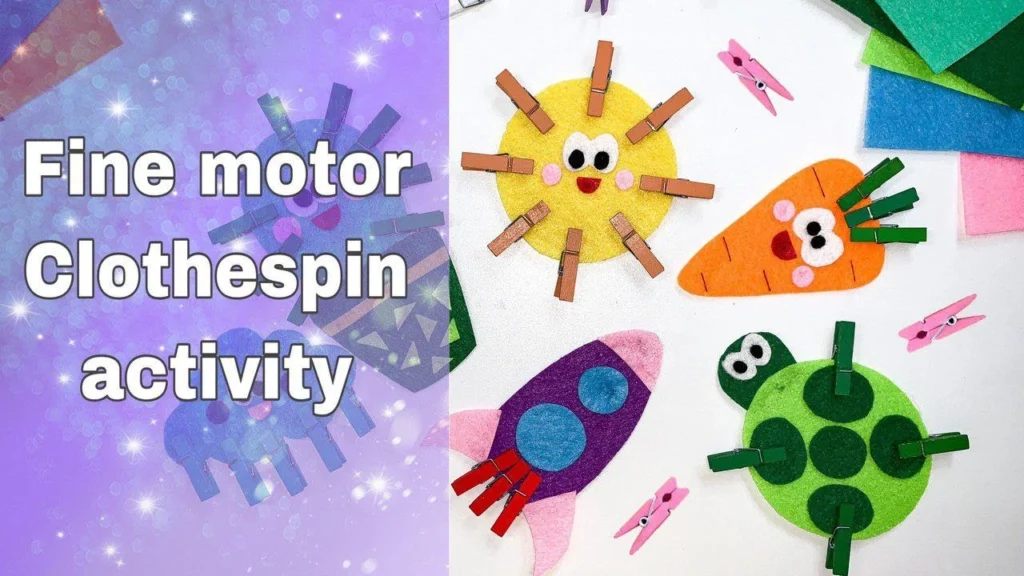
4. The Clothespin Line-Up
- What you need: A handful of clothespins and a sturdy piece of cardboard or the edge of a small box.
- How to do it: Show your child how to squeeze the clothespins to open them and clip them along the edge of the cardboard.
- The skill it builds: Strengthens the pincer grasp, which is essential for holding a pencil correctly later on.
5. The Postman Game
- What you need: An old oatmeal container or coffee can with a lid, and some playing cards or large buttons.
- How to do it: Cut a small slit in the plastic lid, just big enough for a card or button to pass through. Your child’s “job” is to mail the items through the slot.
- The skill it builds: Wrist rotation, hand-eye coordination, and understanding of object permanence (the item is still there even when it disappears!).
6. DIY Play-Doh Sculpting
- What you need: Homemade or store-bought play-doh. (A simple recipe: 1 cup flour, 1/2 cup salt, 2 tsp cream of tartar, 1 cup water, 1 tbsp oil, and a few drops of food coloring. Mix dry, add wet, and stir over medium heat until a ball forms).
- How to do it: Let them roll, pinch, squish, and pull the dough. You can give them a child-safe knife to practice cutting.
- The skill it builds: A powerhouse for hand strengthening and tactile sensory input.
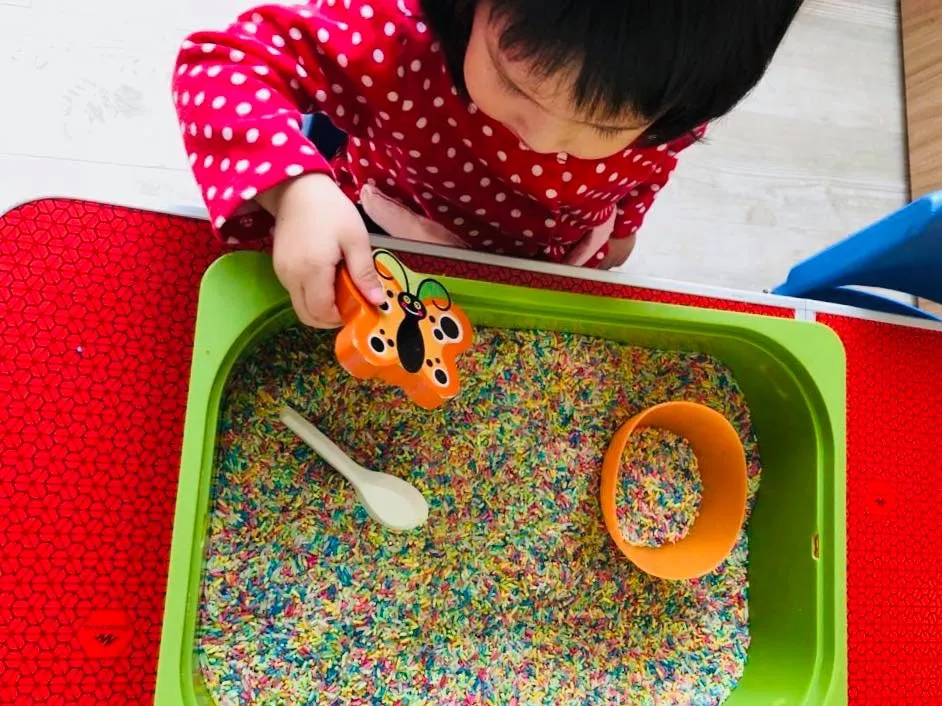
7. Scoop and Pour Station
- What you need: A baking tray or shallow bin, a cup of uncooked rice or beans, and various scoops, spoons, and small cups.
- How to do it: Let your child scoop the rice from one container and pour it into another. The tray helps contain the mess.
- The skill it builds: Wrist control, hand-eye coordination, and understanding of measurement and volume. This is a classic “Practical Life” activity.
8. The Tear-rific Art Project
- What you need: Old magazines, construction paper, and a glue stick.
- How to do it: Show your child how to tear the paper into small strips and pieces. Then, they can use a glue stick to create a collage.
- The skill it builds: Tearing paper is an amazing bilateral coordination task and builds finger strength.
9. Q-Tip Pointillism
- What you need: A few Q-tips, a paper plate with a few blobs of kid-safe paint, and a piece of paper.
- How to do it: Show your child how to dip the Q-tip into the paint and make dots on the paper.
- The skill it builds: Encourages a proper tripod (three-finger) pencil grasp in a fun, no-pressure way.
10. The Sock Matching & Rolling Helper
- What you need: A pile of clean laundry, specifically socks!
- How to do it: Have your little one help you find the matching pairs of socks. Then, show them how to roll them into a ball together.
- The skill it builds: Visual discrimination, and the rolling motion is fantastic for bilateral coordination.
11. The Silverware Sort
- What you need: The clean silverware from your dishwasher and the silverware tray.
- How to do it: Sit with your child and have them help you sort the spoons, forks, and butter knives into the correct compartments.
- The skill it builds: Sorting, categorizing, and the fine-tuned movements of grasping different shapes and weights.
12. Spray Bottle Target Practice
- What you need: A clean, empty spray bottle filled with water and a target (you can do this outside on a fence, or in the shower on the wall).
- How to do it: Set the nozzle to “stream.” The repeated action of pulling the trigger is the main event.
- The skill it builds: An excellent and surprisingly tough hand strengthening exercise.
13. The Great Button-Coin Sort
- What you need: A mixed pile of large buttons and coins (use larger coins like quarters).
- How to do it: Ask your child to sort the items into two separate piles, one for buttons and one for coins.
- The skill it builds: Pincer grasp practice and visual discrimination between different objects. This simple task is also one of the many fun games that boost a toddler’s cognitive development.
14. Water Dropper Fun
- What you need: An eyedropper or a clean medicine syringe, a cup of water, and an ice cube tray.
- How to do it: Show your child how to suck water up into the dropper and then squeeze it out, one drop at a time, into each section of the ice cube tray.
- The skill it builds: Develops the arch of the hand and isolates finger movement, which is tricky but important.
15. The Zipper Board
- What you need: An old pair of jeans or a zippered pouch you don’t need anymore. You can even cut the zipper out and glue it to a piece of cardboard.
- How to do it: Let your child practice zipping and unzipping.
- The skill it builds: The exact skill needed for zipping a jacket! It combines pincer grasp with a pulling motion.
A Quick Note on Safety
Many of these activities involve small items. It’s absolutely essential to supervise your child closely, especially if they are still in the phase of putting everything in their mouth. You know your child best, so choose activities that are appropriate for their specific stage of development.

Common Questions From Parents
What if my child isn’t interested in an activity?
Don’t force it! The beauty of child-led play is following their lead. Maybe they aren’t ready for it, or maybe it just doesn’t seem fun to them today. Put it away and try again in a week or two, or try a different activity. The goal is joyful learning, not a checklist.
How long should we do these activities for?
For toddlers and preschoolers, a few minutes can be a long time. Aim for 5-15 minutes of focused time. The moment you see them losing interest or getting frustrated, it’s a good time to move on.
My child puts everything in their mouth. What can I do?
This is a very normal developmental stage. Stick to the larger-item activities like the sponge transfer, spray bottle, or play-doh. For smaller items like pasta or buttons, you may need to wait a few months and always provide 1-to-1 supervision.
You’ve Got This
The next time you see a stray clothespin or a pile of dry pasta, I hope you see it a little differently. Not as clutter, but as an opportunity. An opportunity for connection, for learning, and for building a capable, confident little human.
You don’t need a perfectly curated playroom. You just need to be present, a little creative, and willing to embrace a tiny bit of mess. Your home, and everything in it, is the perfect classroom.





- Be Respectful
- Stay Relevant
- Stay Positive
- True Feedback
- Encourage Discussion
- Avoid Spamming
- No Fake News
- Don't Copy-Paste
- No Personal Attacks
- Be Respectful
- Stay Relevant
- Stay Positive
- True Feedback
- Encourage Discussion
- Avoid Spamming
- No Fake News
- Don't Copy-Paste
- No Personal Attacks
