Dear Parent Who Has Zero Time: Here Are 10 Ways to Take Care of Yourself
Published: 14 Nov 2025
If one more well-meaning person tells you to “just make time for yourself” or “take a relaxing bubble bath,” are you going to scream?
Yeah, me too.
When you’re deep in the trenches of parenthood, especially with little ones, the concept of self-care can feel like a cruel joke. Who has time to read a book when you can’t even go to the bathroom alone? Who has the energy to do a 60-minute yoga class when you’ve been up three times in the night?
The standard advice doesn’t work because it wasn’t designed for our reality. It assumes we have long, uninterrupted stretches of time, which we absolutely do not.
So let’s make a deal. Let’s throw out the fantasy version of self-care. Instead, we’re going to focus on something else entirely: tiny, achievable acts of self-preservation. These aren’t about luxury; they’re about survival. They are the small moments you can sprinkle throughout your day to keep your cup from running completely empty.
We’re not aiming for a total transformation overnight. We’re aiming for 1% better, one tiny moment at a time. Ready to try something that might actually work?

Why “Self-Care” Feels Impossible (And How to Reframe It)
Before we get to the ideas, let’s get honest about why this is so hard. It usually boils down to two things: a lack of time and a mountain of guilt.
You feel guilty for taking a moment for yourself when there are dishes to be done, emails to answer, and tiny humans who need you. You think, “I should be doing something productive.” This mindset leads to burnout, making it harder to be the calm, present parent you want to be. When you’re running on fumes, your patience is the first thing to go. It can be the very thing that leads you to a moment where you’ve yelled at your kids and need to repair and reconnect.
This is where a shift in perspective is so powerful. I’ve found so much help from a couple of experts who really get it.
A Lesson from an Expert on Habits and an Expert on Kindness
First, there’s James Clear, the author of the mega-bestseller Atomic Habits. His whole philosophy is about making changes so small they are impossible to say no to. He has this “Two-Minute Rule” which says any new habit should take less than two minutes to do.
Instead of “read a book,” the habit becomes “read one page.” Instead of “do yoga,” it’s “roll out my yoga mat.”
When we apply this to self-care, it’s a game-changer. We stop looking for an hour and start looking for two minutes. This isn’t about being lazy; it’s about being strategic.
Second, there’s Dr. Kristin Neff, a leading researcher on self-compassion. Her work teaches us that treating ourselves with the same kindness we’d offer a friend is not selfish; it’s essential for our well-being. When you feel that pang of guilt for taking five minutes, Dr. Neff would ask: “What would you say to a dear friend who was this exhausted and overwhelmed?” You’d never tell them to just suck it up. You’d tell them to take a breath, sit down for a minute, and be kind to themselves.
Thinking of self-care as an act of self-compassion flips the script. It’s no longer an indulgence. It’s a necessity that allows you to show up with more patience and love for your family. In a way, modeling this for your children is a powerful lesson in how to teach empathy you show them it’s important to care for others and for yourself.
So, our new rules for self-care are:
- It must be tiny (thank you, James Clear).
- It must be an act of kindness, not another chore (thank you, Dr. Neff).
With that in mind, here are 10 ideas that fit the bill.
10 Realistic Self-Care Ideas You Can Do in 5 Minutes or Less
Pick one. Just one. Don’t try to do them all. Find the one that sounds less like a chore and more like a gift to your future self.
1. The One-Song Reset
Put on one song you absolutely love, preferably with headphones. For the three or four minutes it’s playing, you have one job: just listen. Don’t fold laundry, don’t scroll your phone, don’t tidy up. Sit on the floor, lean against the counter, or close your eyes in your chair. Let the music wash over you. It’s amazing how a single song can shift the entire mood of your brain.
2. Mindful Hydration
You probably have a cup of coffee, tea, or a water bottle nearby. For one minute, just focus on it. Notice the warmth of the mug in your hands. Watch the steam rise. When you take a sip, notice the temperature and the taste. Don’t gulp it down on the way to the next task. This simple act of paying attention to one small thing can pull you out of a spiral of chaotic thoughts.
3. The 60-Second Stress-Release Stretch
Parenting is a physical job. We’re constantly hunched over, lifting, and carrying. Stand up and do this simple sequence:
- Reach up: Interlace your fingers and push your palms toward the ceiling. Breathe in deep.
- Fold forward: Exhale and slowly fold forward, letting your head and arms hang heavy. Let your neck release.
- Roll up: Slowly roll back up to standing, one vertebra at a time.
That’s it. It takes less than a minute and helps release some of the physical tension you’re holding in your back and shoulders.
4. The Sensory Grounding “Spy” Game
This is a classic technique to calm anxiety, and you can do it anywhere. It’s called the 5-4-3-2-1 method. Silently, or even out loud with your kids, name:
- 5 things you can see
- 4 things you can feel (your feet on the floor, the fabric of your shirt)
- 3 things you can hear (the hum of the fridge, a bird outside)
- 2 things you can smell (your coffee, a crayon)
- 1 thing you can taste (your toothpaste, a sip of water)
This pulls your brain out of “what-if” worry mode and plants it firmly in the present moment.
5. The “Brain Dump” Note
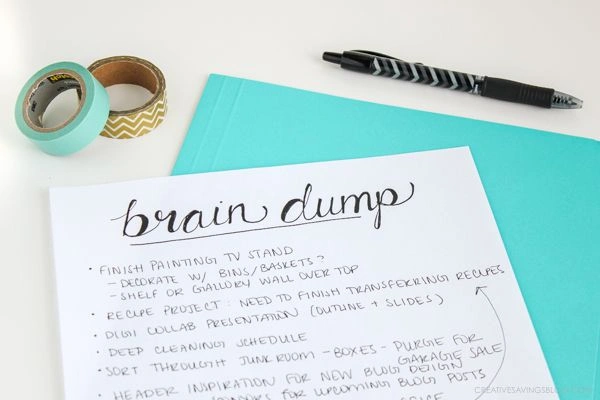
Is your mind a browser with 50 open tabs? Grab a sticky note or open the notes app on your phone. For two minutes, write down everything that’s taking up mental space. The grocery list, the bill you have to pay, the appointment you need to make, the worry about your toddler’s sleep. Don’t organize it. Just get it out of your head and onto the “paper.” This externalizes the mental load and can provide an immediate sense of relief.
6. Find Your Scent Anchor
Scent is powerfully linked to emotion and memory. Find a smell that makes you feel calm or happy. It could be a bottle of lavender essential oil, a citrus-scented hand lotion, or even just smelling the coffee beans before you brew them. When you feel your stress level rising, take 30 seconds to unscrew the cap and take a few deep, intentional breaths. It’s a tiny sensory escape.
7. The Low-Effort Connection Text
Sometimes self-care is about remembering you’re a person outside of being a parent. Think of one friend you haven’t talked to in a while. Send them a simple, low-pressure text like, “Hey, thinking of you and hope you’re having a good week!” or “Saw this funny meme and it made me think of you.” It takes 30 seconds, requires no immediate response, and reinforces a social connection that can easily fade during busy parenting years.
8. The Doorway Deep Breath
This is a perfect habit to stack, James Clear-style. Every time you walk through a specific doorway in your house, like the one into your kitchen or your child’s bedroom, use it as a trigger. Pause, place a hand on your stomach, and take one slow, deep breath. In through your nose, out through your mouth. It’s a 10-second reset you can do 20 times a day without even trying.
9. Listen to a Single Podcast Segment
You don’t have time for a full hour-long podcast. But can you listen to the first five minutes while you unload the dishwasher? Many podcasts have short, distinct segments. Listening to just the intro or one short story can give you a dose of adult conversation, a new idea, or a much-needed laugh.
10. The “Do One Tiny Thing” Tidy
When your environment is chaotic, your mind feels chaotic. But trying to clean the whole house is a recipe for overwhelm. Instead, pick one tiny thing. Wipe down just the kitchen counter. Put the three pairs of shoes by the door back in the closet. Stack the mail into a single pile. A single act of creating order in one small spot can give you a surprising sense of control and calm.
Making It Happen: Your Simple Plan
Feeling inspired is one thing; actually doing it is another.
- Pick ONE Idea: Don’t try to do all 10. Which one sounds the most like a treat and the least like a chore? Start there.
- Link It to an Existing Habit: Try James Clear’s “habit stacking.” For example: “After I pour my morning coffee, I will do my 60-second stretch.” Or, “After I buckle my child into their car seat, I will take three deep breaths.”
- Lower Your Expectations: The goal is not perfection. The goal is to do it, even for 30 seconds. Some days you’ll forget, and that’s okay. This is about progress, not perfection. Remember Dr. Neff’s self-compassion.
This isn’t about adding another thing to your to-do list. It’s about strategically weaving moments of rest into the fabric of your already busy day.
Common Questions
What if I feel guilty taking even five minutes for myself?
This is the number one hurdle. The guilt is real. The key is to reframe it. You are not “taking away” time from your family. You are investing in your own well-being so you have more to give them. A calmer, more present parent is a gift to your children. Think of it as a crucial tool to help reduce parental burnout, not as a luxury.
How can five minutes of self-care possibly make a difference?
It feels too small to matter, right? But think about the cumulative effect. Five minutes of intentional calm is infinitely better than zero minutes. These small acts disrupt the stress cycle. They send a signal to your nervous system that you are safe and can relax, even just for a moment. Over time, these small resets add up and build your resilience, making it easier to manage anxiety and stress in the long run.
My house is a disaster and I’m behind on work. Shouldn’t I use that time for chores?
You could. But if you’re constantly operating from a place of depletion, you do everything less efficiently and with more resentment. Taking five minutes to recharge can actually make you more effective when you return to your tasks. You’ll be able to think more clearly and act with more patience.

You’re Doing an Amazing Job
Being a parent is the hardest, most wonderful, most exhausting job on the planet. The fact that you’re even reading this shows how much you care about your family and your own well-being.
Please, let go of the idea that you have to earn your rest. You deserve it just by being human. Forget grand gestures and spa days for now. The real secret to surviving these intense years is found in the stolen moments, the tiny acts of kindness you give yourself.
It’s in the deep breath you take before opening a bedroom door. It’s in the song that reminds you who you are. It’s in the decision to be as compassionate with yourself as you are with your beloved children.
What’s one tiny thing you can do for yourself today?






- Be Respectful
- Stay Relevant
- Stay Positive
- True Feedback
- Encourage Discussion
- Avoid Spamming
- No Fake News
- Don't Copy-Paste
- No Personal Attacks
- Be Respectful
- Stay Relevant
- Stay Positive
- True Feedback
- Encourage Discussion
- Avoid Spamming
- No Fake News
- Don't Copy-Paste
- No Personal Attacks
