What a Panic Attack *Actually* Feels Like When You’re a Parent
Published: 17 Nov 2025
It happens in the most ordinary moments.
Maybe you’re trying to unload the dishwasher while a toddler clings to your leg and a baby starts crying in the other room. Maybe you’re in the grocery store, navigating a squeaky cart and a child who desperately wants the neon-colored cereal.
Suddenly, it’s not just stress anymore.
Your heart starts hammering against your ribs like a trapped bird. The air feels thick, impossible to pull into your lungs. The edges of your vision might go fuzzy, and a strange, metallic taste floods your mouth. A single, terrifying thought cuts through the noise: Something is terribly wrong.
If this sounds familiar, you may have experienced a panic attack. And having one when you are the person in charge, the responsible adult for a small, vulnerable human, is a uniquely terrifying experience. Let’s talk about it. Not in cold, clinical terms, but what it actually feels like, parent to parent.
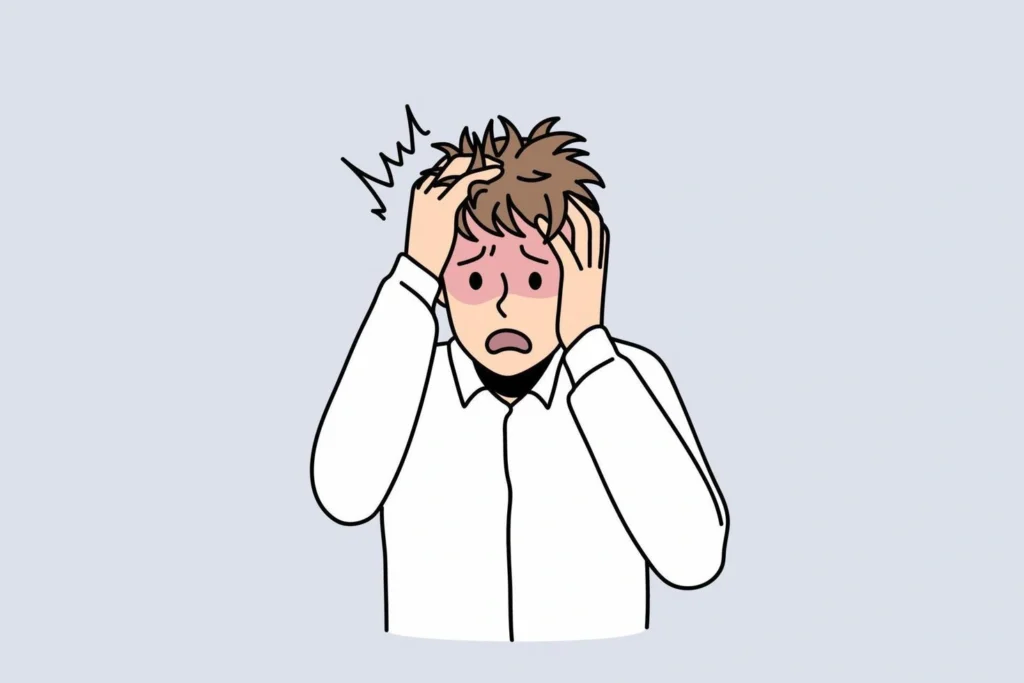
The Physical Onslaught: When Your Body Screams Danger
A panic attack isn’t just in your head. It’s a full-body, physiological event. It’s the body’s “fight or flight” system going into overdrive for no apparent reason. It feels like your body has betrayed you, declaring a five-alarm fire when there isn’t even any smoke.
For a parent, this can feel like:
- A Sudden Heart Emergency: The chest pain and pounding heart are so intense, the first thought for many is, “I’m having a heart attack.” You might clutch your chest, convinced that this is it, right here in the middle of the living room floor surrounded by Lego.
- Suffocation: You gasp for air, but it feels like you’re breathing through a coffee stirrer. This feeling of being unable to breathe is primal, and it only cranks up the fear.
- Losing Your Senses: Dizziness, lightheadedness, or a feeling of being detached from your body (depersonalization) can make you feel like you’re about to faint. The immediate fear? “Who will catch the baby if I pass out?”
- A Loss of Control: Your hands might tremble uncontrollably. You could feel tingling in your fingers and feet, or suddenly feel freezing cold or intensely hot. You are no longer in command of your own body, which is a horrifying feeling for anyone, let alone someone in charge of a child’s safety.
This isn’t an exaggeration. It’s a wave of physical symptoms that are so real and so intense, they convince you that you are in immediate, mortal danger.
The Mental Spiral: Where Guilt and Fear Take Over
The physical symptoms are only half the story. The mental and emotional side of a parental panic attack is what adds a layer of shame and deep, specific fear. Your brain, trying to make sense of the body’s alarm bells, starts supplying its own terrifying narrative.
This isn’t just general anxiety. This is anxiety filtered through the lens of parenthood.
Have you ever had thoughts like these during an attack?
- “What if I hurt them?” An intrusive, unwanted thought might flash through your mind. “What if I lose control and drop the baby?” or “What if I snap?” These thoughts are not desires; they are fears. But in the moment, they feel so real, and they create a spiral of guilt. You feel like a monster for even thinking it.
- “I’m a terrible parent.” The self-judgment is immediate and brutal. “A good parent wouldn’t be falling apart like this. I can’t even handle this. My kids deserve better.”
- “They can see me breaking.” You become hyper-aware of your children. Are they scared? Do they know something is wrong with me? Am I traumatizing them by letting them see me like this? This often leads to desperate attempts to “act normal,” which only adds more pressure and fuel to the fire. If you’ve ever found yourself trying to smile and calmly read a board book while your heart feels like it’s going to explode, you know this feeling.
- “I’m going crazy.” The combination of bizarre physical feelings and terrifying thoughts can lead to one simple conclusion: “I am losing my mind.”
This mental spiral is isolating. After all, how do you explain this to someone? How do you admit that you were terrified of yourself around your own beloved children? This is why so many parents suffer in silence. If you’ve been carrying the weight of this, please know: these thoughts are a symptom of panic, not a reflection of your character or your love for your children.
And if things have ever gotten so overwhelming that you’ve found yourself snapping or yelled at your kids? How to repair & reconnect is something we all need to learn. It’s about repair, not perfection.
A Shift in Perspective: What an Anxiety Expert Taught Me
For a long time, my response to these feelings was to fight them. To clench my jaw, try to “calm down,” and wrestle the panic back into its box. It never worked. It was like trying to hold a beach ball underwater; the struggle was exhausting, and the ball always shot back up with more force.
Then I stumbled upon the work of an anxiety coach named Barry McDonagh, author of the book “DARE.” His approach felt completely backward at first, but it was the first thing that ever gave me a sense of agency during an attack.
His core idea is this: Panic attacks are fueled by the fear of the panic itself. We feel a weird sensation, we fear it’s the start of an attack, that fear pours adrenaline into our system, and boom, we create the very thing we were afraid of.
McDonagh proposes we stop fighting and instead, “DARE” the panic. It’s an acronym that gives you a script to run in your head.
- D – Diffuse: When the scary thoughts pop up (“What if I pass out?”), you answer them with a simple, dismissive phrase like “So what?” or “Whatever.” It diffuses the power of the thought. “What if my heart is beating fast?” So what? Let it beat fast. It’s a strong muscle.
- A – Allow: This is the hardest part. Don’t fight the physical sensations. Allow them to be there. Accept them. Feel the tingling, the rapid heart rate, the dizziness. Observe it like a curious scientist. Tell yourself, “It’s just adrenaline. It’s uncomfortable, but it’s not dangerous.” Fighting it tells your brain the threat is real. Allowing it teaches your brain that the alarm is false.
- R – Run Toward: This is the game-changer. You actually challenge the panic to do its worst. You say to yourself, “Okay, panic, is that all you’ve got? Give me more!” By “running toward” the fear, you call its bluff. You can’t be afraid of something you are actively asking for. It short-circuits the entire fear cycle.
- E – Engage: As the wave of adrenaline starts to pass (and it always does, usually within minutes), gently move your attention to something outside of yourself. Don’t do it to escape, but as a final step. Engage with your child. Describe the color of a toy out loud. Count the Cheerios on the high-chair tray. This helps your brain move on.
This isn’t a magic cure, but it is a powerful tool. It’s a way to stop being a victim of the panic and start being an active participant in its de-escalation.
In the Aftermath: The Panic Hangover
A panic attack drains your system completely. Once the adrenaline recedes, it leaves behind what many call a “panic hangover.” You might feel:
- Utterly exhausted, like you’ve just run a marathon.
- Shaky, weak, and fragile.
- Mentally foggy and detached.
- Hyper-aware of every little twinge in your body, afraid it’s the start of another attack.
This is the time for radical self-compassion. You have just been through a major physiological and emotional event. Give yourself grace.
- Sit down. For five minutes. Don’t try to clean up the mess or start the next task. Just sit.
- Drink a glass of cold water. Focus on the feeling of the cold glass in your hand and the water going down your throat.
- Speak kindly to yourself. Say, “That was really hard, and I got through it.”
This is also a moment where finding small ways to replenish your energy is crucial. Finding 5 simple tips to manage anxiety and stress that actually work can be a lifeline on these tough days. And remember, even five minutes of quiet can count as 10 self-care ideas for parents who have absolutely no time.

Common Questions from Parents Like Us
Is this the same thing as parental burnout?
They are related but different. Think of it this way: How to reduce parental burnout and finally feel like yourself again is about addressing the chronic, long-term exhaustion and emotional distance from parenting. A panic attack is an acute, sudden episode of intense fear. Chronic burnout can certainly make you more susceptible to panic attacks, as your system is already depleted
Can my kids tell I’m having a panic attack?
Young children are incredibly attuned to our emotional states. They might not know what is happening, but they will sense that something is off. They might get quiet, or act out to get your attention. The key isn’t to be a perfect robot who never shows fear, but to be a parent who can say afterward, “Mommy was having a really big, scary feeling for a minute, but it passed. I’m okay now. You’re safe.
Do I need to see a doctor for this?
Yes, it is always a good idea to talk to a doctor. First, to rule out any underlying medical conditions that could be causing the symptoms. Second, a doctor or a mental health professional can provide you with proven strategies, from therapy (like CBT) to medication if needed, to help you manage the panic. You do not have to handle this alone.
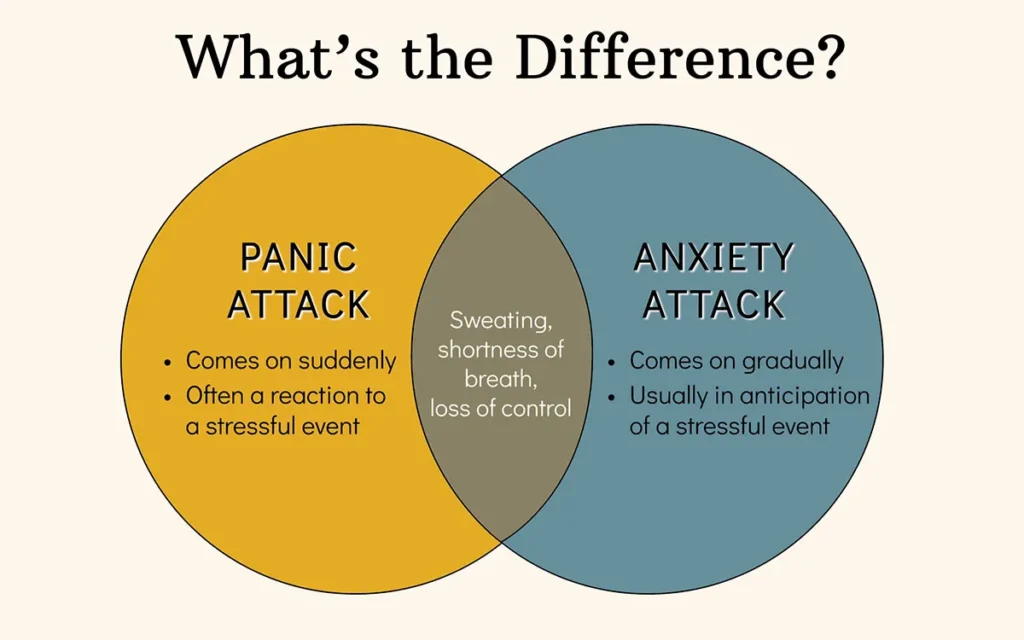
What’s the difference between a panic attack and an anxiety attack?
“Anxiety attack” isn’t a clinical term, but people often use it to describe a period of intense anxiety that can build up over time. A panic attack is distinct because of its sudden onset, the severity of its symptoms, and its relatively short duration (peaking within about 10 minutes)
The Path Forward Starts With One Breath
Living with the fear of another panic attack can feel like walking on a tightrope. But understanding what is happening to you is the first step toward taking your power back.
This is not a character flaw. It is not a sign of your inadequacy as a parent. It is a treatable response from an over-taxed nervous system that is trying its best to protect you in a world that feels, for many parents, incredibly overwhelming.
You are the safe harbor for your children, and you deserve to feel safe in your own mind and body. The path forward might involve talking to a professional, trying a new technique like DARE, or simply giving yourself permission to be human.
You got through the last one. You’ll get through the next one. And you are, and always will be, more than your panic.



- Be Respectful
- Stay Relevant
- Stay Positive
- True Feedback
- Encourage Discussion
- Avoid Spamming
- No Fake News
- Don't Copy-Paste
- No Personal Attacks
- Be Respectful
- Stay Relevant
- Stay Positive
- True Feedback
- Encourage Discussion
- Avoid Spamming
- No Fake News
- Don't Copy-Paste
- No Personal Attacks
