Is It “Just” Parenting Stress, or Something More?
Published: 17 Nov 2025
It’s 3:17 AM. The house is quiet, but your mind is screaming. You’re running through the day’s to-do list, which bleeds into tomorrow’s, which spirals into a five-year plan you don’t have. Did you remember to sign that permission slip? Is your toddler’s picky eating a phase or a problem? Are you saving enough for college? Are you a good enough parent?
The weight on your chest feels heavy. Your heart is doing a little tap dance against your ribs.
If this sounds familiar, you’re not alone. Welcome to the club of modern parenthood, where a low-grade hum of stress seems to be the price of admission. We worry. It’s part of the job description.
But sometimes, that hum can turn into a roar. The worry can feel less like a temporary reaction to a stressful day and more like a permanent state of being. And that’s when a scary question can creep in: Is this normal parenting stress, or is it something else? Could this be a real anxiety disorder?
It’s a question many of us are afraid to even ask, but understanding the answer is one of the kindest things you can do for yourself and your family. So, let’s walk through this together, as fellow travelers on this parenting journey, and get some clarity.

First, Let’s Talk About Everyday Stress (The Parent Version)
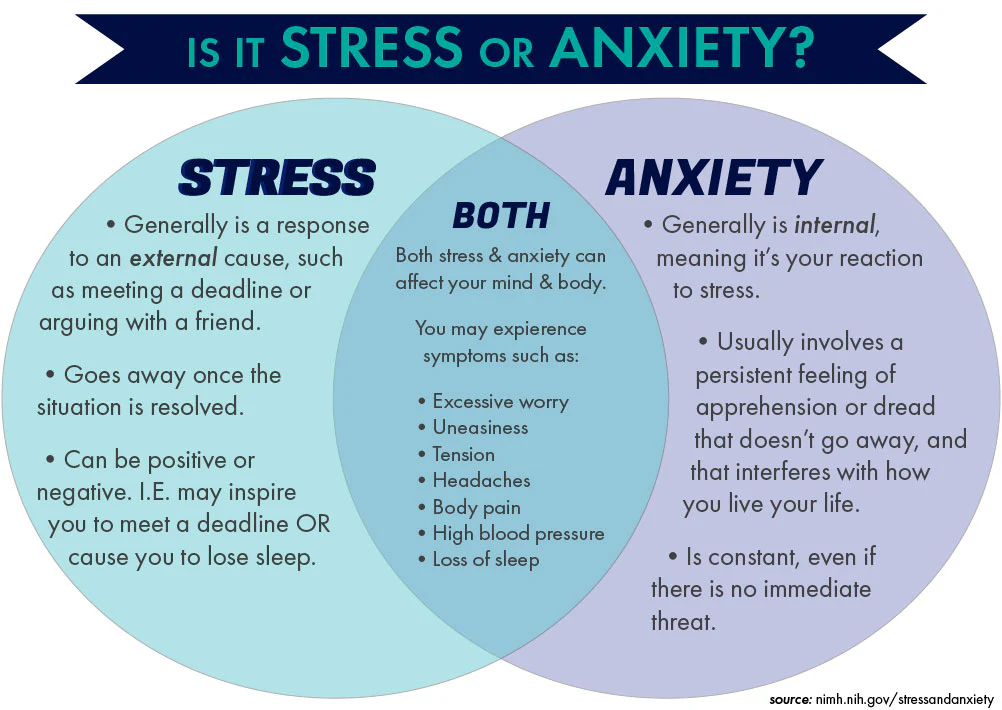
Think of stress as your body’s reaction to a challenge or demand. It’s a biological and psychological response to an external trigger. The keyword here is external.
The phone rings, and it’s the school nurse. Your stomach drops. That’s stress.
Your toddler decides to paint the dog with yogurt five minutes before you need to leave for work. Your blood pressure spikes. That’s stress.
You’re trying to juggle work deadlines, household chores, and a child’s fever. You feel stretched to your absolute limit. That’s stress.
In these situations, the cause of your distress is clear and present. Stress is your body saying, “Okay, we have a problem to solve right now!” It floods you with hormones like cortisol and adrenaline to help you focus, react, and deal with the threat (or the yogurt-covered dog).
Once the situation is resolved, the stressful feelings usually start to fade. The permission slip gets signed. The bills get paid. The child’s fever breaks. Your body and mind can return to their baseline. It might leave you feeling drained and exhausted, but the intense, activated feeling subsides. This is a normal, and in many ways, essential part of life.
So, What Makes an Anxiety Disorder Different?
Anxiety, on the other hand, often feels more internal. While stress is a reaction to a specific trigger, anxiety can persist even when there is no immediate, identifiable threat.
If stress is a response to a clear and present danger, anxiety is the feeling of danger when none exists, or a reaction that is far out of proportion to the actual situation.
It’s the difference between:
- Stress: “I’m worried about this upcoming presentation at work.”
- Anxiety: “I’m worried I’m going to get fired for no reason, even though my boss says I’m doing great. What if I can’t provide for my family? What if we lose our house?”
Anxiety often involves persistent, excessive fears about things that might happen. It’s a constant state of “what if” that can hijack your thoughts and feelings, making it difficult to function. It doesn’t just go away when a specific problem is solved. It lingers, looking for the next thing to latch onto.
For parents, this can be especially confusing. We have so many legitimate things to worry about! But with an anxiety disorder, the worry becomes the main event, not a side effect of a challenging life.
The Key Differences: A Quick Guide for Overwhelmed Parents
Let’s break it down into four key areas. Think of this as a quick reference guide to help you get a clearer picture of what you might be experiencing.
1. The Trigger: External Problem vs. Internal Worry
- Stress: Is directly tied to a specific situation or trigger. Your child is struggling in school, you have a conflict with your partner, or you’re facing a financial crunch. The worry is about that thing.
- Anxiety Disorder: The worry often feels free-floating and can attach to anything and everything. You might feel a deep sense of dread or unease without being able to pinpoint exactly why. Or, a small trigger might set off a massive, disproportionate spiral of worry.
2. The Duration: Temporary vs. Persistent
- Stress: Tends to be short-term. It lasts as long as the stressful event does, and then it eases up. It’s episodic.
- Anxiety Disorder: It’s chronic and persistent. The feeling of being on edge, worried, and tense is there most days, for weeks or even months on end. It becomes your new normal, and you might not remember the last time you felt truly relaxed.
3. The Intensity: Proportional vs. Overwhelming
- Stress: The emotional response is generally proportional to the stressor. A big problem causes a big reaction; a small problem causes a small reaction.
- Anxiety Disorder: The emotional reaction is often much bigger than the situation warrants. A friend not texting back immediately might trigger a deep fear of social rejection. A minor cough from your child might lead to hours of frantic online searching about rare diseases. The feeling is overwhelming and hard to control. For some, this can even escalate into a terrifying physical event. If you’ve ever wondered what a panic attack actually feels like for a parent, you know how intense this can be.
4. The Impact: Annoying vs. Disabling
- Stress: It’s unpleasant and tiring, but you can generally still function. You get through your day, even if you’re counting the minutes until you can collapse on the couch.
- Anxiety Disorder: It starts to significantly interfere with your daily life. It might cause you to avoid social situations, struggle with work, or find it hard to be present with your kids. It can affect your sleep, your appetite, and your ability to enjoy things you used to love. It feels less like a challenge and more like a disability.
A Game-Changing Idea from a Neuroscientist
I was deep in this world of trying to understand my own worry when I came across the work of Dr. Judson Brewer, a neuroscientist and psychiatrist. His way of explaining anxiety was a huge lightbulb moment for me.
He describes anxiety as a habit loop that gets stuck. It goes like this:
- Trigger: You feel a sense of uncertainty or worry. (e.g., Your boss sends a vague “we need to talk” email).
- Behavior: Your brain defaults to its go-to behavior: worrying. You start to spin out, catastrophizing about all the possible negative outcomes.
- Reward: This is the tricky part. The “reward” for worrying is that it feels like you’re doing something. You’re planning, preparing, trying to solve the problem in your head. It gives you a temporary, false sense of control, which makes your brain want to do it again the next time you feel a trigger.
Seeing anxiety as a stuck habit loop, rather than a personal failing, is incredibly powerful. It helps explain why it feels so persistent and automatic. Everyday stress doesn’t usually create this kind of self-perpetuating loop. You deal with the problem, and the loop closes. With anxiety, the loop just keeps spinning.
The Official Checklist: When Doctors Get Involved
While Dr. Brewer’s concept helps us understand the feeling, the medical community has specific criteria for diagnosis. According to the National Institute of Mental Health (NIMH), the most common anxiety disorder, Generalized Anxiety Disorder (GAD), involves excessive anxiety and worry occurring more days than not for at least six months.
To be diagnosed with GAD, an adult must also have three or more of the following symptoms:
- Feeling restless or on edge
- Being easily fatigued
- Difficulty concentrating or mind going blank
- Irritability
- Muscle tension
- Sleep disturbance (difficulty falling or staying asleep, or restless, unsatisfying sleep)
Does reading that list feel a little too familiar? It’s important to remember that many parents experience these things due to chronic stress and sleep deprivation. The key differentiators for a disorder are the severity, the persistence (lasting for months), and the significant distress or impairment it causes in your life.
When Is It Time to Ask for Help?
This is the most important question. There is no prize for suffering in silence. Being a good parent includes modeling how to take care of yourself.
It’s time to consider reaching out to a professional if:
- Your worry feels uncontrollable and is taking up a huge amount of your mental energy every day.
- It’s significantly impacting your sleep or your physical health (headaches, stomach issues).
- You’re starting to avoid places or situations because of your anxiety.
- You feel constantly irritable and it’s affecting your relationships, especially with your kids. You might find yourself snapping more often and then feeling immense guilt. (If this is you, learning how to repair & reconnect after you’ve yelled is a vital skill).
- You feel a pervasive sense of dread or hopelessness.
- You simply feel that the joy is being squeezed out of your life by worry.
Reaching out isn’t a sign of weakness; it’s a sign of incredible strength. It’s admitting that you’re carrying too much and need someone to help you lighten the load. This could mean talking to your primary care doctor, a therapist, or a psychiatrist. The constant feeling of being on high alert can lead to a state of exhaustion, and learning how to reduce parental burnout is often a critical part of the solution.

Common Questions from Worried Parents
Can chronic stress turn into an anxiety disorder?
Yes, it can. Living in a state of high stress for a prolonged period can prime your brain for anxiety. It can lower your resilience and make you more vulnerable to developing a clinical anxiety disorder. This is why managing everyday stress is so important.
What are the physical symptoms I should look out for?
Both stress and anxiety can cause physical symptoms. With stress, you might get a tension headache or an upset stomach. With an anxiety disorder, the physical symptoms can be more intense and chronic. They include a racing heart, shortness of breath, dizziness, muscle aches, trembling, and chronic fatigue.
Is a panic attack the same as an anxiety disorder?
Not exactly. A panic attack is a sudden, intense episode of fear that triggers severe physical reactions when there is no real danger. An anxiety disorder (like GAD) is a more chronic, lower-grade state of worry. However, people with some anxiety disorders (like Panic Disorder) experience recurrent, unexpected panic attacks
Can I just “power through it” or “get over it” on my own?
While there are many wonderful self-help tools, if you are struggling with a true anxiety disorder, “powering through it” is often not an effective or kind strategy. These are real medical conditions with biological components. Professional support, which can include therapy, medication, or both, can provide you with the tools and relief you deserve. There are many simple tips to manage anxiety and stress that actually work, but they are often most effective when combined with professional guidance
The First Step Is Understanding
If you’ve read this far, you’ve already taken a courageous first step: you’ve looked your worry in the eye and asked, “What are you?”
Knowing the difference between stress and anxiety isn’t about getting a label. It’s about getting clarity. It’s about giving yourself permission to get the right kind of support. Whether you’re dealing with the intense, but normal, stress of parenting or a more persistent anxiety disorder, you don’t have to handle it alone.
Parenting is the hardest job in the world, and you are doing it in a world full of pressures. Be as kind to yourself as you are to your children. You deserve to feel at peace. You deserve to feel joy. And you deserve support on your journey to get there.





- Be Respectful
- Stay Relevant
- Stay Positive
- True Feedback
- Encourage Discussion
- Avoid Spamming
- No Fake News
- Don't Copy-Paste
- No Personal Attacks
- Be Respectful
- Stay Relevant
- Stay Positive
- True Feedback
- Encourage Discussion
- Avoid Spamming
- No Fake News
- Don't Copy-Paste
- No Personal Attacks
