It’s Not About the Hours. It’s About the Connection
Published: 20 Nov 2025
You know the feeling, don’t you? It’s 6 PM. You’ve just walked in the door, or maybe you’re closing your laptop after working from home. Your child runs up to you, wanting to show you a drawing or tell you a long, meandering story about a bug they saw.
And you’re only half-listening.
Part of your brain is still in that last meeting. Another part is mentally scanning the fridge, trying to figure out dinner. Your phone buzzes on the counter, a notification glowing. You nod and say, “That’s great, sweetie,” but you both know you weren’t really there. A familiar pang of guilt hits you right in the chest. Am I doing enough? Am I present enough?
For so many of us, parenting has become a silent, stressful accounting of hours. We’re caught in a debate between “quality time” and “quantity time,” often feeling like we’re failing at both. We see picture-perfect family outings on Instagram and wonder how they find the energy, let alone the time.
But what if we’ve been asking the wrong question all along? What if the goal isn’t to log more hours, but to make the moments we do have truly count? What if connection has nothing to do with the clock?
Let’s talk about that. Let’s give ourselves permission to let go of the guilt and focus on what really matters.

The Great Parenting Debate: Quality vs. Quantity
It feels like a constant tug-of-war. On one hand, there’s the idea of Quantity Time. This is the belief that simply being physically present for long stretches is what’s most important. It’s being in the same house, sharing the same space, and being available. The pressure for this is huge, especially when one parent works long hours or a family has a demanding schedule.
On the other hand, there’s Quality Time. This is often portrayed as special, pre-planned, “making memories” type of events. Think trips to the zoo, elaborate craft projects, or a dedicated “family game night.” The pressure here is to make every interaction meaningful and fun, which can be just as exhausting.
The problem is that we often end up in a worst-of-both-worlds scenario: distracted quantity time. We’re physically there, but our minds are a million miles away. We’re “spending the whole weekend” with our kids, but we’re also answering emails, doing chores, and scrolling through our phones. The result? We feel drained, and our kids still feel a little disconnected
Why Your Presence Is More Powerful Than Your Time
Shifting our focus from the duration of our time to the depth of our presence can change everything. It’s not about being a perfect parent; it’s about being a present one. Here’s why that small shift is so incredibly powerful.
It Builds a Secure Foundation
At its core, a child’s sense of safety and love comes from feeling seen and heard by their caregivers. When you pause, make eye contact, and genuinely listen to their story about the bug, you are sending a powerful message: “You matter to me. Your world is important.” These moments are the very building blocks of a secure attachment, which is the foundation for their confidence and emotional well-being for the rest of their life.
It Models What Matters
How do we expect our children to listen to us if we are always half-listening to them? When we put our phones down and give them our undivided attention, even for just five minutes, we are modeling focus, respect, and empathy. We subconsciously teach them empathy by showing them what it feels like to be truly understood. We show them that people are more important than screens and that real connection happens face-to-face.
It Actually Reduces Parental Burnout
Constantly feeling like you should be doing more is a direct path to parental burnout. The mental load of tracking hours and feeling guilty is exhausting. But when you give yourself permission to focus on small, high-impact moments of connection, the pressure lifts. Ten minutes of truly present, joyful play is more energizing for both you and your child than two hours of distracted, half-hearted time together. It fills your cup, too.
A Lesson from a Neuropsychiatrist: The Power of Attunement
I was wrestling with this very idea myself, feeling endlessly guilty about my divided attention, until I came across the work of Dr. Daniel Siegel, a clinical professor of psychiatry and a leading expert on child development. He co-authored the book “The Whole-Brain Child,” and his concepts completely changed how I view my role as a parent.
Dr. Siegel talks about something called “attunement.”
It sounds complex, but the idea is beautifully simple. Attunement is about tuning in to your child’s inner world. It’s about seeing beyond their behavior to the feelings underneath and connecting with them on that emotional level. It’s not about doing something, but about being with someone.

Here’s what that looks like in real life:
- The Distracted Response: Your toddler is screaming because they can’t get a block to fit in a puzzle. You, while trying to make dinner, call out, “It’s okay! Just try a different one!” You’ve offered a solution, but you haven’t connected.
- The Attuned Response: You pause what you’re doing for a moment, crouch down, and say, “Wow, that is so frustrating, isn’t it? You really want that block to fit right there, and it just won’t go.”
See the difference? The second response doesn’t solve the problem. But it does something far more important: it validates your child’s feelings. It says, “I see you. I get it. We’re in this together.” That is the essence of quality time. It can happen in 30 seconds, and it’s more powerful than an entire afternoon at the park if you’re on your phone the whole time.
Attunement is the ultimate form of quality time, and it doesn’t require a ticket, a reservation, or a cleared schedule. It just requires your presence.
What “Quality Time” Actually Looks Like (It’s Simpler Than You Think)
Okay, so how do we put this into practice when life is still demanding and chaotic? The key is to stop thinking in terms of grand gestures and start looking for tiny opportunities.
Embrace the 10-Minute Magic Window
You don’t need an hour. Find 10-15 minutes where you can be completely distraction-free. Put your phone in another room (this is crucial!), turn off the TV, and just enter your child’s world. Lie on the floor and let them lead the play. Ask open-ended questions. You might be amazed at what happens when they have your complete, undivided attention. These short bursts can be powerful anchors in their day.
Turn Chores into Connection
“Quality time” doesn’t have to be separate from real life. Dr. Siegel calls this “chore-play.” Instead of waiting until the chores are done to connect, fold that mountain of laundry together. Let your child stir the pancake batter, even if it makes a mess. The conversation and teamwork that happen during these simple, shared tasks are pure connection. These activities also happen to be great for boosting a toddler’s cognitive development.

Master the Art of the “Bid”
Renowned researchers have found that strong relationships are built on tiny, everyday interactions. Think of it like this: when your child says, “Hey, Mom, look!” or your partner points out a bird, that is a “bid” for your attention. How you respond is everything. Turning towards them, even with a simple “Oh, cool!” forges a micro-connection. Turning away or ignoring the bid, even unintentionally, erodes connection. The foundation of quality time is simply turning towards the bids for connection from your child throughout the day.
Protect Your Rituals
The bookends of the day, morning and bedtime, are sacred ground for connection. Even if the day is a whirlwind, you can protect these moments. A two-minute cuddle in bed in the morning, asking “What are you excited about today?” or a consistent bedtime story routine can provide the reliable, warm connection your child craves.
Common Questions
What if I’m a single parent or work two jobs?
I only have 15 minutes some days.That’s okay. In fact, that’s amazing. Make those 15 minutes gold. Put your phone away, make eye contact, and just be with them. A focused 15 minutes is worth more than a distracted three hours. You are doing enough.
Does quality time mean I have to play on the floor with LEGOs all the time?
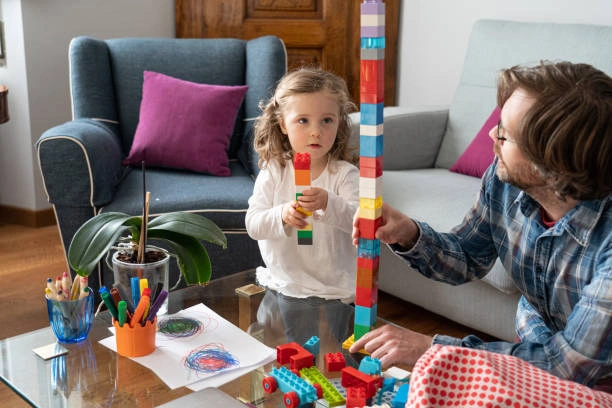
I find it boring.Absolutely not! Quality time is about attunement, not a specific activity. It can be a deep conversation on the drive to school. It can be baking together. It can be reading a chapter of a book out loud, even to an older kid. Find something you both genuinely enjoy, even if it’s just sitting together and talking.
My phone is my biggest struggle. How do I manage it?
You’re not alone. The first step is acknowledging it without shame. Our phones are designed to be addictive. Try creating “phone-free zones” (like the dinner table) or “phone-free hours” (like the first hour after you get home). Tell your child, “I’m putting my phone away now so I can be all yours.” This not only helps you stick to it but also shows them they are your priority.
You are the parent your child needs. You are enough. The goal isn’t to be a perfect, ever-present parent from a storybook. The goal is to be a real, present, and attuned parent who shows up, again and again, in the small moments that make up a life.
It’s not about the hours you have. It’s about the love you share within them.
So, what’s one small way you can offer a moment of true connection today?

Your Guide to Social Development Milestones: From First Waves to First Friendships (Ages 1-5)




- Be Respectful
- Stay Relevant
- Stay Positive
- True Feedback
- Encourage Discussion
- Avoid Spamming
- No Fake News
- Don't Copy-Paste
- No Personal Attacks
- Be Respectful
- Stay Relevant
- Stay Positive
- True Feedback
- Encourage Discussion
- Avoid Spamming
- No Fake News
- Don't Copy-Paste
- No Personal Attacks
