Am I Worrying Too Much? A Gentle Guide to Postpartum Anxiety
Published: 23 Nov 2025
It is 3:00 AM. The house is quiet, the lights are dim, and your baby is finally asleep. You should be sleeping too. Everyone keeps telling you to “sleep when the baby sleeps.”
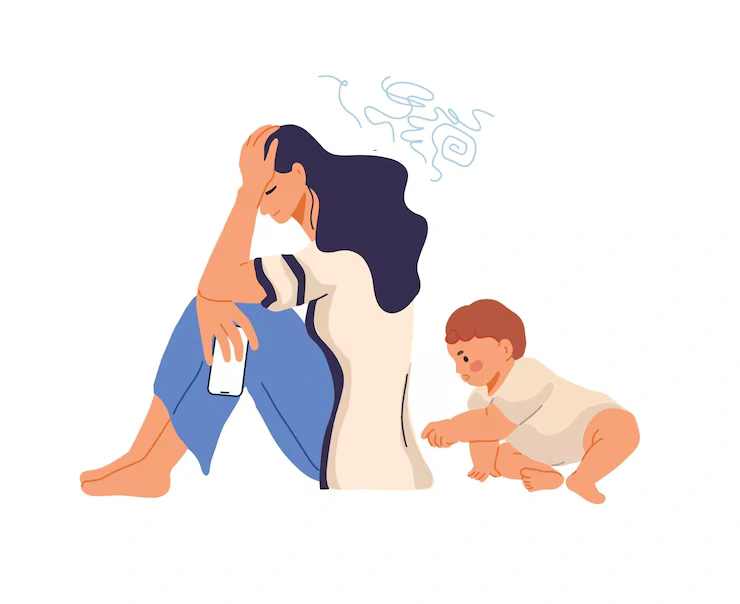
But you are wide awake. You are staring at the baby monitor or hovering over the bassinet, waiting to see that tiny chest rise and fall. Your heart is racing, your mind is running through a checklist of everything that could go wrong, and you feel a tightness in your chest that just won’t let up.
Does this sound familiar?
If you nodded your head, I want you to take a deep breath right now. You are not broken. You are not a bad parent. You might be navigating the choppy waters of Postpartum Anxiety (PPA).
While Postpartum Depression (PPD) gets a lot of media attention, anxiety is actually the silent struggle for many new parents. It often flies under the radar because we assume that new parents should be worried. It is a huge responsibility to keep a tiny human alive, after all.
But there is a line where helpful worry turns into debilitating anxiety. Together, we are going to look at where that line is, what the experts say about what you are feeling, and how you can start to feel like yourself again.
The “New Normal” vs. The Red Flags
Let’s be real for a second. A certain amount of worry is completely biological. Your brain has literally rewired itself to become a hyper-vigilant guardian. That shot of adrenaline you feel when the baby cries? That is nature’s way of ensuring you respond quickly.
However, “normal” worry usually has a trigger and a resolution. You worry the baby is cold, you check their temperature, you see they are fine, and you relax.
Postpartum Anxiety operates differently. It is worry without an off switch.
Here are the distinct differences.
Everyday Parent Stress:
- You worry about specific things (schedule, feeding, crying).
- You can be distracted from your worry by a funny movie or a conversation.
- You can sleep when the baby sleeps (if you choose to).
- Your physical symptoms subside once the stressful moment passes.
Postpartum Anxiety:
- Your worry is generalized and often catastrophic (thinking the worst-case scenario).
- You feel a sense of dread even when everything is going “right.”
- You cannot sleep even when exhausted because your mind is racing.
- Physical symptoms (racing heart, nausea, dizziness) persist all day.
If you are finding it hard to distinguish between the two, I highly recommend reading more about the difference between everyday stress and a real anxiety disorder to see where your feelings might land on the spectrum.
The Physical and Emotional Signs of Postpartum Anxiety
Anxiety is not just “in your head.” It is a full-body experience. Because your body is stuck in “fight or flight” mode, you might be experiencing physical symptoms that you haven’t connected to your mental health yet.
Physical Signs:
- Insomnia: Lying awake for hours despite exhaustion.
- Changes in appetite: Feeling too nauseous to eat, or overeating to soothe nerves.
- Hot flashes or dizziness: Feeling sudden waves of heat or feeling faint.
- Muscle tension: Constantly clenched jaw or raised shoulders.
Emotional Signs:
- Irritability: Snapping at your partner or older children over small things. This is often a sign of a brain on overload.
- Dread: A constant feeling that “something bad is about to happen.”
- Inability to sit still: You feel like you constantly need to be doing, cleaning, or checking something.
- Control issues: Feeling like if you aren’t the one doing it, it won’t be done safely.
Have you noticed yourself feeling unusually angry or short-fused? This is a very common, yet rarely discussed, symptom. You can learn more about how to yell less and repair and reconnect with your family if this symptom is affecting your relationships.
Borrowed Expertise: Understanding “Scary Thoughts”
This is the part of the article where I want you to really listen, because this is the symptom that carries the most shame.
Many parents with PPA experience intrusive thoughts. These are sudden, terrifying flashes of something bad happening to the baby. Sometimes, these thoughts are even about you accidentally hurting the baby.
For this, we turn to Dr. Karen Kleiman, the founder of The Postpartum Stress Center and a pioneer in maternal mental health. She coined the term “Scary Thoughts” to describe this phenomenon.
According to Dr. Kleiman’s research, nearly 91% of new mothers report having scary, intrusive thoughts.

The Expert Insight:
Dr. Kleiman explains that these thoughts are actually a result of your brain trying to protect your baby. Your brain is scanning for threats so aggressively that it imagines worst-case scenarios so you can avoid them.
The most important takeaway from Dr. Kleiman’s work is this: Having a scary thought does not mean you want to do it, nor does it mean you will do it.
In fact, the reason these thoughts make you so anxious is that they are the exact opposite of who you are and what you want. If you were a dangerous parent, these thoughts wouldn’t bother you. The fact that they terrify you is proof that you are a protective, loving parent.
Why Is This Happening to You?
It is easy to blame yourself, but the causes are largely biological and environmental.
- The Hormone Drop: After delivery, estrogen and progesterone levels plummet. For sensitive individuals, this crash can trigger anxiety.
- Sleep Deprivation: Sleep is the fuel your brain needs to regulate emotion. When you are running on empty, your anxiety threshold lowers significantly.
- The Pressure Cooker: Modern parenting is isolating. We often lack the “village” we were evolved to have.
Sometimes, what looks like anxiety is actually a state of deep exhaustion. It is worth checking in on yourself to see how to reduce parental burnout and finally feel like yourself again. If your tank is completely empty, anxiety is often the warning light on the dashboard.
When to Seek Help (and How to Start)
You do not need to wait until you are having a panic attack to ask for support. If your worry is stealing your joy, impacting your relationships, or preventing you from sleeping, you deserve help.
Here is a gentle roadmap for what to do next
1. Talk to Your Partner
Anxiety can make us withdraw, leaving partners confused. They might think you are just tired or angry. Open up to them. If you aren’t sure how to start that conversation, try using these tips on how to explain your anxiety to your partner without starting a fight.
2. Prioritize Sleep (Even if it’s Imperfect)
You cannot heal an anxious brain without rest. This might mean taking shifts with a partner or asking a family member to watch the baby for two hours. It is not selfish; it is medical necessity. If you struggle to hand over the reins, read our guide on how to ask for and accept help without feeling guilty.

3. Consult a Professional
Speak to your OB-GYN, midwife, or a therapist who specializes in Perinatal Mood and Anxiety Disorders (PMADs). Postpartum Support International (PSI) is an incredible resource for finding local help
Common Questions About Postpartum Anxiety
Will they take my baby away if I tell the doctor I have scary thoughts?
This is the number one fear preventing parents from seeking help. The answer is no. Trained professionals understand the difference between intrusive thoughts (which are anxiety-based and very common) and psychosis (which is a break from reality and very rare). Doctors want to help you feel better so you can parent your child, not separate you from them
Can I take medication while breastfeeding?
Yes. There are many anxiety medications that are considered safe for breastfeeding. Your doctor can help you weigh the benefits and risks to find the best solution for your family.
Does PPA go away on its own?
It can improve over time as hormones regulate and sleep improves, but “white-knuckling” through it causes unnecessary suffering. With therapy or medication, you can feel better much faster than waiting it out
A Final Note of Hope
You are in the thick of it right now, and it feels incredibly heavy. But Postpartum Anxiety is temporary and highly treatable. You are not failing. You are a human being going through a massive biological and life transition.

You have already taken the first step by reading this article and acknowledging how you feel. Be gentle with yourself today.






- Be Respectful
- Stay Relevant
- Stay Positive
- True Feedback
- Encourage Discussion
- Avoid Spamming
- No Fake News
- Don't Copy-Paste
- No Personal Attacks
- Be Respectful
- Stay Relevant
- Stay Positive
- True Feedback
- Encourage Discussion
- Avoid Spamming
- No Fake News
- Don't Copy-Paste
- No Personal Attacks
