When the Body Says No: 7 Physical Symptoms of Anxiety You Might Be Ignoring
Published: 24 Nov 2025
Have you ever woken up with a jaw so sore it felt like you had been chewing on rocks all night? Or maybe you have visited your doctor for recurring stomach aches, only to be told after a battery of tests that “everything looks normal”?
It is incredibly frustration. You know you are in pain. You know you don’t feel right. Yet, there is no virus, no injury, and no clear medical explanation.
For many of us, especially parents carrying the mental load of raising a family, the answer isn’t in a virus. It is in our nervous system.
We often think of anxiety as a “head” problem. We imagine it as racing thoughts, worry about the future, or that loop of “did I forget something?” playing in our minds. But anxiety is a master of disguise. When we are too busy to listen to our emotions because we are busy raising tiny humans, our anxiety finds a different way to speak up.
It moves into the body.
In this guide, we are going to look at the physical symptoms of anxiety that you might be brushing off as “just getting old” or “parent tired.” We will look at why this happens and how you can finally start listening to what your body is trying to tell you.
The Science of “Borrowed Stress”: Why Your Body Keeps the Score
Before we list the symptoms, it is vital to understand why this is happening to you. You aren’t imagining the pain. It is real.
To understand this, we can look to the work of Dr. Gabor Maté, a physician and renowned expert on the relationship between stress and physical illness. In his groundbreaking book, When the Body Says No, Dr. Maté explores a concept that hits home for many parents.
He argues that when we suppress our “no”
our need for rest, our boundaries, or our negative emotions our body eventually says “no” for us.
Think about your life right now. As a parent, you are likely constantly suppressing your immediate needs to care for your child. You hold in your frustration when a toddler has a tantrum. You delay going to the bathroom because the baby is sleeping on you. You push through exhaustion because dinner needs to be made.
Dr. Maté suggests that this chronic suppression of emotion confuses the body’s immune and nervous systems. The stress hormones (like cortisol) that are meant to help us run from a tiger start to simmer in our blood and tissues, causing inflammation and tension.
So, when your back goes out or your digestion stops working, it might be your body’s way of forcing you to stop because your mind refused to take a break.
7 Physical Symptoms of Anxiety You Might Be Ignoring
If you have been feeling “off” lately, take a moment to scan your body. Do any of these sound familiar?
(Disclaimer: I am a friend and researcher, not a doctor. Always check with a medical professional to rule out other causes for physical pain.)
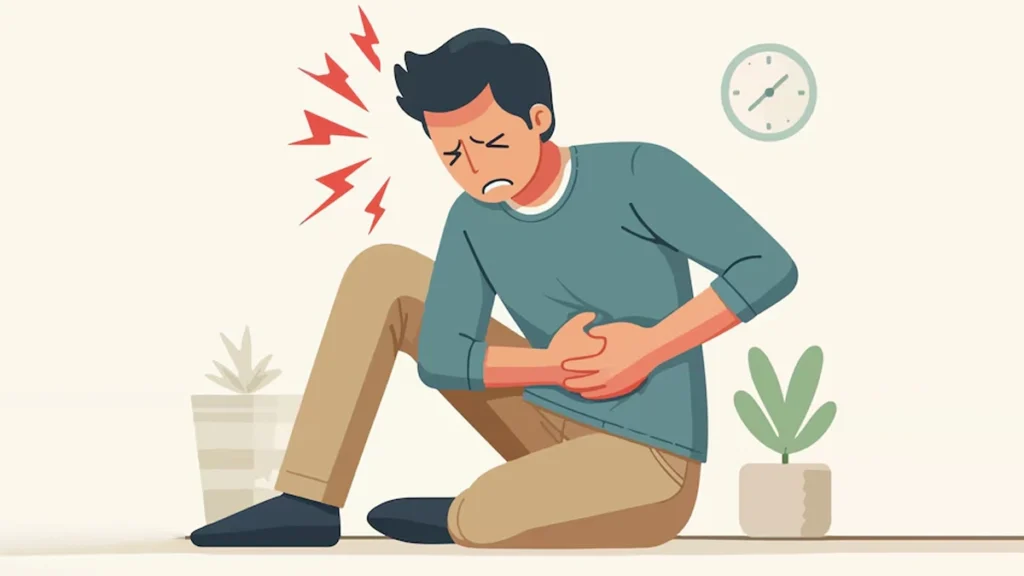
1. The “Anxiety GI” (Stomach Issues)
There is a massive connection between your brain and your gut. Scientists even call the gut the “second brain” because it is lined with millions of neurons.
When you are anxious, your body enters “fight or flight” mode. To save energy for running away from danger, your body slows down digestion. This can look like:
- Sudden nausea without being sick.
- “Butterflies” or a gnawing feeling in the pit of your stomach.
- Chronic bloating or changes in bathroom habits (IBS is frequently linked to anxiety).
If you notice your stomach acts up every Sunday night before the school/work week starts, that is a physical symptom of anxiety.
2. Air Hunger (Feeling Like You Can’t Take a Deep Breath)
Have you ever felt like you just can’t get a satisfying lungful of air? You might find yourself yawning excessively trying to get that “click” of a full breath.
This is often called “air hunger.” When we are subconsciously anxious, we tend to take shallow, rapid breaths into our chest rather than our belly. Over time, this changes the balance of oxygen and carbon dioxide in our blood, leading to dizziness and that scary feeling of suffocation.
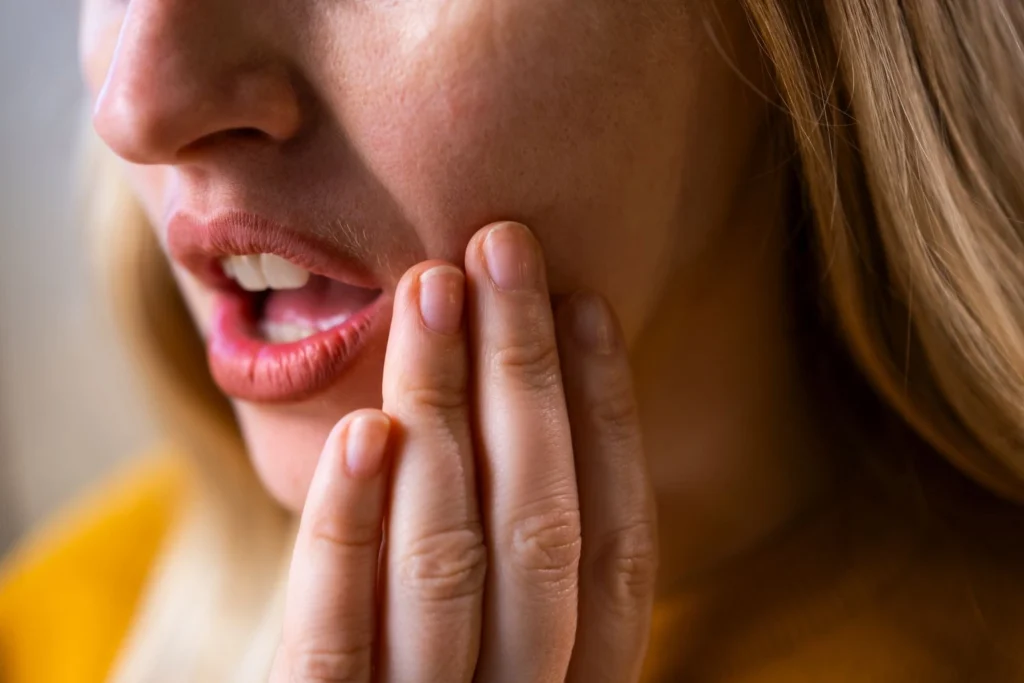
3. The Jaw Clench and Tension Headaches
Pay attention to your mouth right now. Is your tongue pressed to the roof of your mouth? Are your teeth touching?
Many of us carry the weight of the world in our masseter muscles (the jaw). We clench during the day when we are concentrating and grind our teeth at night when we are sleeping. This radiates upward, causing tension headaches that wrap around the forehead like a tight band.
4. Phantom Dizziness or “Jelly Legs”
This one can be terrifying if you don’t know what it is. Adrenaline prepares your muscles for action. When that adrenaline floods your system but you are just standing in line at the grocery store, it can make you feel shaky, weak, or like the floor is tilting slightly.
5. Skin Rashes and Itching
It sounds strange, but your skin is an organ that reacts to stress. A spike in cortisol can trigger hives, eczema flares, or just a general feeling of itchiness. If you find yourself scratching your arms or neck when you are overwhelmed, your body is signaling distress.
6. Globus Sensation (Lump in the Throat)
This is a classic sign. You might feel like you have a pill stuck in your throat or a tightness that makes swallowing feel difficult. This is caused by muscle tension in the throat and esophagus triggered by stress. It is your body physically tightening up against the pressure you are under.
7. Random Muscle Twitches
Have you ever had an eyelid that just won’t stop twitching? Or a random spasm in your thigh? When your nervous system is hyper-aroused, it sends erratic signals to your muscles, causing them to fire randomly. It is annoying, but it is usually a sign your system needs to power down.
How to Translate Your Body’s Language
Okay, so you recognize yourself in these symptoms. Now what?
If we follow the wisdom of Dr. Maté and other somatic experts, the goal isn’t just to “fix” the symptom with a pill (though medicine has its place!). The goal is to address the root cause: the disconnect between your mind and body.
Here is how to start reconnecting.
Name It to Tame It
The next time you get that headache or stomach ache, ask yourself a direct question: What was I thinking about right before this started?
Often, you will find a correlation. “I was thinking about the dentist appointment,” or “I was worrying about my toddler’s speech delay.” By linking the pain to the thought, you reduce the fear that you are physically ill, which stops the cycle of anxiety.
Complete the Stress Cycle
In their book Burnout, researchers Emily and Amelia Nagoski talk about “completing the stress cycle.” When you feel that physical tension, you have to physically release it. You cannot just “think” your way out of it.
- Shake it out: Literally shake your arms and legs for 30 seconds.
- Cold water: Splash freezing water on your face to stimulate the Vagus nerve (which calms the heart).
- The Physiological Sigh: Take two short inhales through the nose, followed by one long exhale through the mouth. This is the fastest way to manually reset your nervous system.
Seek Support for the Root Cause
If your body is screaming “no,” you might need to look at where in your life you need to set boundaries. Are you doing too much? Are you suffering from High-Functioning Anxiety where you look fine on the outside but are crumbling inside? Acknowledging this is the first step toward healing.
Common Questions About Physical Anxiety
Can anxiety mimic a heart attack?
Yes, and this is very common. Panic attacks can cause chest pain, racing heart, and numbness in the left arm. It is always safer to get checked by a doctor, but once your heart is cleared, understand that anxiety can produce nearly identical symptoms
How long do physical symptoms last?
They can last as long as the underlying stress remains unprocessed. For some, it is minutes; for others, it can be chronic tension lasting weeks.
Why do I feel anxious when I wake up?
Cortisol levels are naturally highest in the morning to help you wake up. If you already have high baseline anxiety, this morning spike can feel like a jittery, nauseous start to the day.
A Note to the Reader
If you are reading this and realizing that your “mystery illness” might actually be your body crying out for help, please don’t judge yourself.
It is a normal, biological reaction to the immense pressure of modern parenting. Your body is not betraying you; it is trying to protect you the only way it knows how.
By listening to these signals the headaches, the stomach knots, the tension you can start to give yourself the care you give so freely to everyone else. You are allowed to rest. You are allowed to say no. And you are allowed to feel well.





- Be Respectful
- Stay Relevant
- Stay Positive
- True Feedback
- Encourage Discussion
- Avoid Spamming
- No Fake News
- Don't Copy-Paste
- No Personal Attacks
- Be Respectful
- Stay Relevant
- Stay Positive
- True Feedback
- Encourage Discussion
- Avoid Spamming
- No Fake News
- Don't Copy-Paste
- No Personal Attacks
