Have you ever had one of those days where you feel like you have done absolutely everything for your child?
Published: 25 Nov 2025
You cooked their favorite breakfast. You bought them that toy they asked for at the store. You drove them to the park. You washed their favorite jersey so it was ready for practice.
And yet, at 7:00 PM, they look at you with teary eyes and say, “You never play with me.”
It is heartbreaking. It is also baffling. You spent the whole day doing things for them! But here is the secret that changed the way I view parenting: You were broadcasting love on one frequency, but your child was listening on another.
This is the core concept behind The 5 Love Languages for Children.
While you might know these languages from relationship books for adults, applying them to our kids is a game-changer. It isn’t just about making them happy. It is about ensuring they feel secure, understood, and seen.
Let’s explore how to figure out which language your child speaks and how to use it to build a bond that lasts a lifetime.
The “Emotional Tank” Theory
Before we dive into the specific languages, we need to borrow a brilliant concept from Dr. Gary Chapman and Dr. Ross Campbell, the experts who literally wrote the book on this subject (The 5 Love Languages of Children).
They describe every child as having an “Emotional Tank.”
Imagine your car. When the fuel tank is full, the car runs smoothly. It can handle hills, traffic, and long distances. But when the tank is empty? The car sputters. It stalls. It stops working entirely.
Your child is the same.
When their emotional tank is full, they are generally cooperative, happy, and resilient. They can handle a scraped knee or a disappointment at school.
When their emotional tank is running on fumes, you see behavioral issues. Whining, clinging, lashing out, and withdrawing are often just symptoms of an empty tank.
The trick is that different fuels fill different tanks. What fills one child up to the brim might not even move the needle for another.
Breaking Down the 5 Love Languages for Children
Dr. Chapman and Dr. Campbell identified five distinct ways that children (and adults) give and receive love. Most children have a primary language that speaks loudest to them.
1. Physical Touch
For many children, love is a verb, and that verb is hold.
We often think this just means hugs and kisses, but it is much broader than that. For a child whose primary language is Physical Touch, physical contact provides a deep sense of security.
What this looks like:
- They constantly want to sit in your lap.
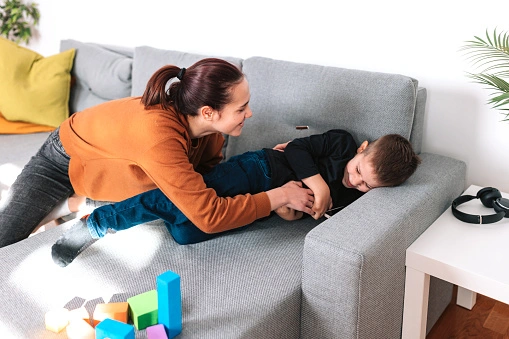
- They enjoy “roughhousing” or wrestling on the floor.
- They touch you when they walk past you.
- They crave back rubs or hair stroking at bedtime.
How to fill their tank:
Don’t wait for them to ask. Offer high-fives, impromptu hugs, or just let them lean against you while you watch a movie. If you have a “touch” child, physical distance feels like emotional distance.
2. Words of Affirmation
“Sticks and stones may break my bones, but words will never hurt me.”
For a child with this love language, that old saying is completely false. Words hold immense power for them. Criticism cuts them deeper than most, but praise makes them soar.
What this looks like:
- They beam when you tell them “Good job!”
- They keep notes or cards you have given them.
- They often tell you, “You’re the best mommy/daddy.”
How to fill their tank:
Be specific. Instead of a generic “Good boy,” try “I really noticed how patiently you waited for your sister to finish her turn. That was so kind of you.” Leave little notes in their lunchbox. Tell them you love them just because, not just when they do something right.
3. Quality Time
This is the language of undivided attention. For these kids, love is spelled T-I-M-E.
This is often the most difficult language for modern parents because we are busy. But for a Quality Time child, you being in the same room isn’t enough. If you are on your phone or washing dishes while they talk, their tank is draining.
What this looks like:
- “Watch this! Watch me! Look at this!”
- They ask you to play with them constantly.
- They get misbehaved or loud specifically when you are on the phone or talking to another adult.
How to fill their tank:
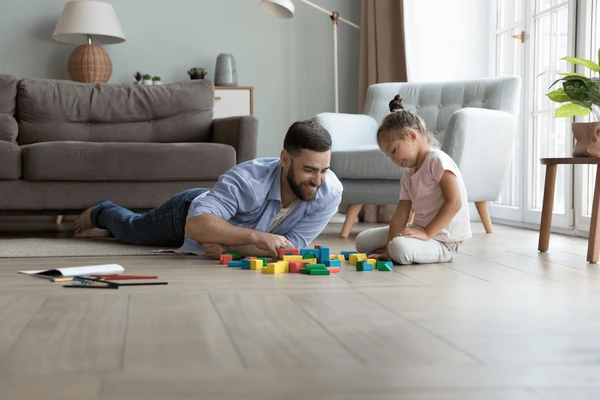
This doesn’t require hours. It requires focus. Ten minutes of sitting on the floor playing Legos with your phone left in the other room is worth more than three hours of you sitting on a park bench while checking emails. Eye contact is your superpower here.
4. Gifts
It is easy to mistake this language for materialism, but that is a misunderstanding. For these children, a gift is a visual symbol of love. It says, “I was thinking about you when we weren’t together.”
What this looks like:
- They treasure the wrapping paper as much as the gift.
- They bring you gifts (a pretty rock, a dandelion, a drawing).
- They remember who gave them which toy months later.
How to fill their tank:
You do not need to spend money to fill this tank. A special stone you found on a walk, a hand-folded paper airplane, or a special snack prepared just for them speaks volumes. It is about the thoughtfulness, not the price tag.
5. Acts of Service
This language is expressed by doing things for the other person. Parents do acts of service all day long (cooking, cleaning, driving), but some children perceive these acts as the ultimate expression of care.
What this looks like:
- They ask you to help them with things they might be able to do themselves (like tying shoes or fixing a toy).
- They feel especially cared for when you make their bed or fix a favorite meal.
- They are often the “helpers” in the family.
How to fill their tank:
This is a delicate balance because we want to raise independent kids. The goal isn’t to be their servant; it is to do things with a spirit of love. Fixing a broken bicycle chain or helping them organize their messy room can be a powerful bonding moment.

How to Discover Your Child’s Mystery Language
If you are reading this and thinking, I have no idea which one my kid is, you are not alone.
For children under age 4, it is almost impossible to know for sure. They need all five languages in abundance. But as they grow, a preference usually emerges.
Here are three ways to act as a detective in your own home:
1. Observe How They Express Love to You
Children naturally “speak” the language they wish to hear.
- Do they constantly draw you pictures? (Gifts)
- Do they always want to wrestle or cuddle? (Physical Touch)
- Do they tell you “You look pretty today”? (Words of Affirmation)
2. Listen to Their Most Common Complaint
The complaint reveals the empty tank.
- “We never go anywhere together!” (Quality Time)
- “You never help me with my homework!” (Acts of Service)
- “You didn’t bring me anything from your trip?” (Gifts)
3. The Choice Experiment
Give them a choice between two different languages and see what they pick.
- “Tonight, would you rather I help you fix your Lego castle (Service) or should we wrestle on the bed for 15 minutes (Touch)?”
- “Would you like a special treat from the store (Gifts) or should we go for a walk just the two of us (Quality Time)?”
Do this over a few weeks, and a clear pattern will likely show up
Common Questions Parents Ask
Can my child’s love language change?
Yes. While we usually have a “primary” language that stays consistent, developmental stages change things. A toddler might be all about Physical Touch, but as a teenager, they might crave Words of Affirmation or Acts of Service (like a ride to the mall).
What if my love language is different from my child’s?
This is very common! It takes intentional effort to speak a language that doesn’t come naturally to you. If you aren’t a “touchy-feely” person but you have a child who craves hugs, you have to stretch yourself. Think of it as learning a foreign language for the sake of your relationship
Does “Gifts” mean I have to spoil my child?
Absolutely not. In fact, Dr. Chapman emphasizes that you should not give gifts in place of the other languages. If a child’s tank is empty of Quality Time, no amount of Xbox games will fill it. Remember: A hand-written note tucked into a book is a “Gift” just as much as a toy is.
The Two-Week Challenge
Here is my challenge to you.
Take the next two weeks to observe your child. Try to identify their primary language. Once you think you know it, shower them with that specific form of love for 14 days.
This doesn’t mean you ignore the other four languages, but you deliberately focus on the primary one.

Watch what happens to their behavior.
Watch what happens to their anxiety levels.
Watch what happens to your connection.
When we speak directly to our child’s heart in a language they understand, we aren’t just parenting them. We are building the foundation of a secure attachment that will support them for the rest of their lives.




- Be Respectful
- Stay Relevant
- Stay Positive
- True Feedback
- Encourage Discussion
- Avoid Spamming
- No Fake News
- Don't Copy-Paste
- No Personal Attacks
- Be Respectful
- Stay Relevant
- Stay Positive
- True Feedback
- Encourage Discussion
- Avoid Spamming
- No Fake News
- Don't Copy-Paste
- No Personal Attacks
