50 Simple, Screen-Free Activities That Actually Help You Connect With Your Child
Published: 1 Dec 2025
You know that nagging feeling when you realize you’ve been in the same room as your child for an hour, but you’ve both been staring at separate screens? You’re not alone. And honestly, the guilt that follows can be crushing.
Here’s what I want you to know before we dive in: this isn’t about becoming an anti-screen warrior or making yourself feel bad about letting your kid watch cartoons while you cook dinner. Screens aren’t the enemy. Disconnection is.
The real goal here is presence. Being with your child, not just near them. And the beautiful thing? Connection doesn’t require expensive outings, crafting skills, or hours of free time. Sometimes it just takes five minutes and your full attention.
So let’s talk about 50 screen-free activities that help you build those real, lasting moments of connection with your child.
Why Screen-Free Time Matters for Connection
Before we get to the list, let’s understand why this matters so much.
Dr. Catherine Steiner-Adair, a clinical psychologist and author of The Big Disconnect: Protecting Childhood and Family Relationships in the Digital Age, has spent years studying how technology affects family bonds. Her research reveals something that might sting a little: children consistently report feeling sad, angry, and lonely when their parents are absorbed in devices.
But here’s the hopeful part. Dr. Steiner-Adair emphasizes that children don’t need perfect parents. They need present ones. Even small pockets of undivided attention can have a profound impact on a child’s sense of security and self-worth.
When you put your phone in another room and give your child your eyes, your ears, and your engagement, you’re doing something powerful. You’re telling them, without words, that they matter more than whatever notification just buzzed.
Get Moving Together: Active Screen-Free Activities
Physical activities release oxytocin and endorphins for both of you. Plus, movement often leads to conversation in ways that sitting across from each other rarely does.

1. Go on a “wondering walk.” No destination, no agenda. Just walk and wonder aloud together. What do you think that bird is looking for? Why do you think they painted that house blue?
2. Play flashlight tag after dark. The novelty of being outside at night makes everything feel like an adventure.
3. Have a dance party in the kitchen. Belt out songs together. Be silly. Let them see you being ridiculous.
4. Build an obstacle course in the backyard. Use whatever you have: hula hoops, pool noodles, old tires, chairs.
5. Fly a kite together. There’s something meditative about watching a kite catch the wind.
6. Wash the car together (and have a water fight). Turn a chore into playtime.
7. Play hide and seek. Yes, even if you’ve played it a thousand times. The delight never fades.
8. Go on a bike ride with no destination. Let your child lead and choose every turn.
9. Skip rocks at a pond or creek. Teach them your technique. Celebrate their splashes.
10. Set up a backyard camping “overnight.” Even if you only last until 9 PM, the novelty creates lasting memories.
Create Something Together: Artsy and Hands-On Activities
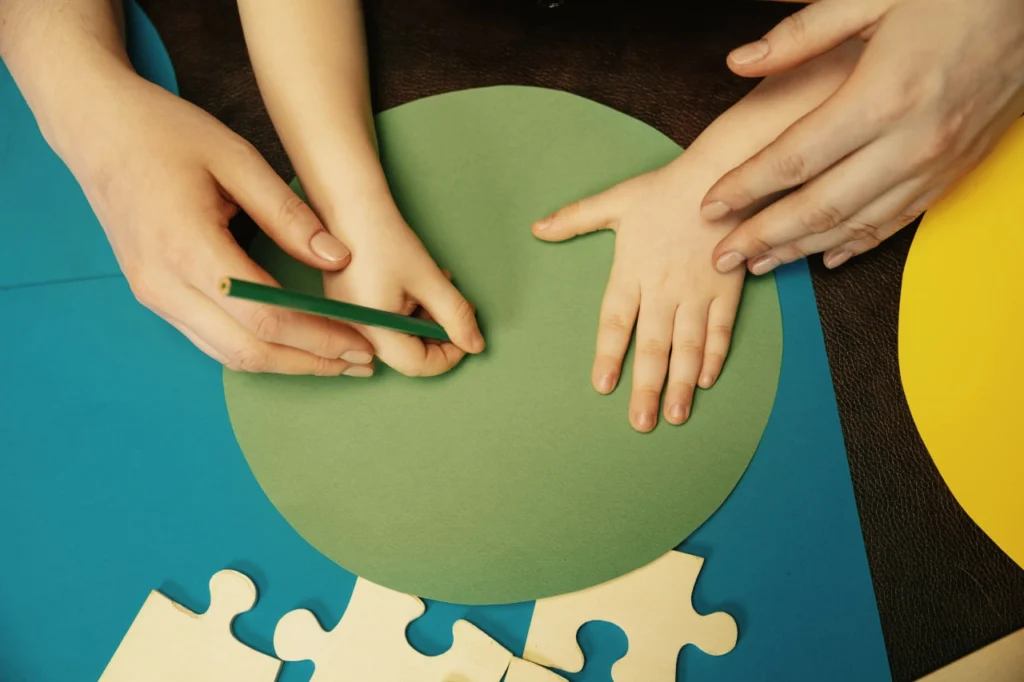
Creating together activates different parts of the brain and often sparks unexpected conversations. The process matters far more than the product.
11. Make homemade playdough. A simple recipe and 20 minutes in the kitchen can lead to hours of imaginative play.
12. Finger paint without worrying about the mess. Lay down a tarp. Wear old clothes. Let go.
13. Build with cardboard boxes. A big box can become a rocket, a house, a submarine. Let their imagination lead.
14. Start a nature collection. Rocks, leaves, feathers. Create a display together.
15. Make friendship bracelets. Simple patterns work great. This is especially wonderful for kids who like to keep their hands busy while talking.
16. Write a story together. You write a sentence, they write the next. See where it goes.
17. Create a family time capsule. Collect small items and notes to open in five years.
18. Design and draw a treasure map. Then hide “treasure” around the house for each other to find.
19. Build the tallest tower you can with random household items. Blocks, books, cushions, anything goes.
20. Make homemade birthday cards for relatives. Stock up and pull them out when birthdays approach.
Slow Down Together: Calm and Cozy Activities

Not every moment of connection needs to be energetic. Some of the deepest bonding happens in quiet, restful spaces.
21. Read aloud together, even after they can read themselves. The intimacy of a shared story never gets old.
22. Lie on a blanket and find shapes in the clouds. Simple, slow, and surprisingly connecting.
23. Give each other hand massages with lotion. Physical touch communicates love in ways words can’t.
24. Listen to a story together. Audio dramas or storytelling podcasts work beautifully for this.
25. Have a “quiet time” together in the same room. You read your book, they read theirs. Parallel presence counts.
26. Practice deep breathing or simple stretches together. Make it playful, not instructional.
27. Watch the rain or snow fall from the window. Sometimes just sitting together in silence is enough.
28. Tell them about your own childhood. What games did you play? What did your room look like?
29. Look through old photo albums or printed pictures. Digital photos don’t hit the same way.
30. Do a puzzle together. A 100-piece puzzle for younger kids, more complex ones for older children.
Learn and Explore Together: Activities That Spark Curiosity
Learning alongside your child, rather than teaching at them, creates a powerful sense of partnership.
31. Start a simple garden, even just herbs in a windowsill. Watching something grow together teaches patience and care.
32. Cook or bake a recipe together from scratch. Let them do real tasks, not just “helper” jobs.
33. Visit the library and pick out books for each other. You choose one you think they’d love, and they choose one for you.
34. Stargaze with a simple star chart. No fancy equipment needed.
35. Learn a magic trick together and perform it for family. The shared “secret” builds closeness.
36. Study a bug or worm you find outside. Get curious. Google questions together later.
37. Learn five words in a new language together. Make it a weekly tradition.
38. Watch ants or birds and wonder aloud about their lives. Model curiosity for them.
39. Visit a farmer’s market and let them choose something to try. New tastes, new experiences.
40. Make a DIY science experiment. Baking soda volcanoes, slime, or density jars all work.
Turn Everyday Moments Into Connection

You don’t always need to carve out special time. Some of the richest connection happens during ordinary life.
41. Let them help with dinner, even if it takes longer. Resist the urge to take over.
42. Fold laundry together and chat. Mundane tasks become meaningful with presence.
43. Take them on your errands and make it an adventure. Let them push the cart. Ask their opinion on things.
44. Play “two truths and a wish” at dinner. Like two truths and a lie, but what’s the one thing you wish had happened today?
45. Create a bedtime ritual that’s uniquely yours. A special song, a made-up story, a gratitude share.
46. Give them your full attention for the first five minutes when you get home. Phones away, eyes on them.
47. Ask open-ended questions in the car. “What’s something that made you laugh today?” beats “How was school?”
48. Invite them to help you fix something. Even if you’re just changing a lightbulb, narrate what you’re doing.
49. Write little notes and hide them in their lunchbox or under their pillow. Simple words of affirmation go far.
50. End each day by telling them one specific thing you love about them. Not just “I love you,” but “I loved how you helped your sister today.”
How to Actually Make This Happen
Fifty activities can feel overwhelming, so let me leave you with three simple principles to make this sustainable:
Start with just one. Pick one activity from this list and do it this week. That’s it.
Prioritize presence over perfection. The activity doesn’t need to go well. Your child doesn’t need to be impressed. They just need you, fully there.
Follow their lead. Pay attention to what lights them up. A child whose love language is quality time might crave those one-on-one activities, while a child who thrives on physical touch might love the roughhousing and dance parties most.
Connection is built in moments, not marathons. And you have what it takes. You already love your child. These activities are just doorways to show them.
Common Questions About Screen-Free Activities
What if my child only wants screens and resists other activities?
This is common, especially if screens have become the default. Start small and don’t frame it as punishment. Offer to do an activity with them rather than telling them to go play without screens. Your presence is the draw. Over time, they’ll associate these moments with connection and start craving them.
My teenager doesn’t want to do “kid” activities. How do I connect without screens?
Teenagers need connection differently. Try activities that feel more like hanging out than structured bonding: cooking together, going for a drive, shooting hoops, or working on a project side by side. Sometimes the best conversations happen when you’re both focused on something else.
What if I work long hours and barely have time?
Quality matters more than quantity. Five minutes of genuine, undivided attention can be more connecting than an hour of distracted presence. Look for opportunities in existing routines: the car ride to school, breakfast time, or those few minutes before bed.
Should I completely eliminate screens?
Not necessarily. Screens aren’t inherently bad, and shared screen time (watching a movie together and discussing it, playing a cooperative video game) can be connecting too. The goal is to ensure screens don’t replace all other forms of connection.
Final Thoughts
Here’s the truth that might surprise you: your child doesn’t need you to be endlessly creative or constantly entertaining. They need you to be present. To look them in the eye. To be curious about their inner world. To choose them over your phone, even for just a few minutes a day.
These 50 activities aren’t really about being screen-free. They’re about being fully there. And when you’re fully there, something beautiful happens. Your child feels seen. They feel safe. And that secure attachment you’re building? It will carry them through their whole life.
So pick one. Start today. And don’t forget to enjoy it yourself.

How to Keep Your Marriage Strong After Having Kids (Without Adding More to Your Plate)





- Be Respectful
- Stay Relevant
- Stay Positive
- True Feedback
- Encourage Discussion
- Avoid Spamming
- No Fake News
- Don't Copy-Paste
- No Personal Attacks
- Be Respectful
- Stay Relevant
- Stay Positive
- True Feedback
- Encourage Discussion
- Avoid Spamming
- No Fake News
- Don't Copy-Paste
- No Personal Attacks
