When to Consider Therapy for Your Parental Anxiety (And What to Expect When You Go)
Published: 1 May 2026
Let’s start with the question that probably brought you here, the one that’s been circling your mind for weeks or maybe months:
“Is what I’m feeling bad enough to need therapy?”
Maybe you’ve already built a collection of coping strategies. You know your breathing exercises. You journal. You’ve read the articles, listened to the podcasts, and tried the grounding techniques. And some of it helps, genuinely. But there’s this nagging feeling underneath it all, a sense that you’re constantly managing something that never quite goes away.
Or maybe it’s simpler than that. Maybe you just feel tired. Tired of the racing thoughts at 2 a.m. about whether your child is safe, developing normally, or getting enough of the “right” kind of attention. Tired of snapping at your partner because your nerves are already shot by dinnertime. Tired of performing calm while your insides feel like a shaken snow globe.
Here’s something I want you to hear before we go any further: You do not need to be in crisis to deserve help. There is no minimum threshold of suffering you need to hit before you’ve “earned” a therapy appointment. If your anxiety is getting in the way of the parent, partner, or person you want to be, that is reason enough.
This guide is here to help you figure out where you stand and to pull back the curtain on what therapy actually looks like so the unknown stops being one more thing to feel anxious about.
The Real Signs Your Parental Anxiety Has Outgrown Self-Help
Self-help tools are wonderful. They are a legitimate, evidence-backed first line of defense for managing everyday anxiety and stress. But they have limits, and recognizing those limits is not a failure. It is self-awareness at its finest.

So how do you know when you’ve crossed from “this is hard but I’m handling it” into territory where professional guidance would genuinely change your life? Here are the signposts worth paying attention to.
Your Anxiety Is Persistent, Not Situational
Every parent worries. A sick child, a big transition like starting school, financial pressure: these situations naturally produce anxiety. But when the anxiety stays even after the situation resolves, or when it floats from worry to worry without any real trigger, something deeper is usually at work.
Dr. Becky Kennedy, clinical psychologist and founder of Good Inside, describes a helpful distinction. She talks about how parents often confuse being a “good, caring parent” with being a “constantly worried parent,” as if the anxiety itself is proof of love. But anxiety that has become your default setting is not the same as attentive parenting. It’s a signal your nervous system is stuck in overdrive.
Ask yourself: When was the last time you felt genuinely calm, not just distracted, for a full day?
Your Coping Tools Feel Like Band-Aids
You might already use techniques like the 5-4-3-2-1 grounding method or short mindfulness exercises to interrupt anxiety spirals. These are real, effective strategies. But if you notice you’re using them multiple times a day, every day, and the underlying anxiety keeps returning at the same intensity, that pattern is worth noticing.
Think of it this way: if you had to ice your knee every single morning just to walk to the kitchen, you wouldn’t say, “Well, the ice is working!” You’d see a doctor about the knee. The same logic applies here.
It’s Affecting Your Parenting Decisions
This is a big one, and it’s the sign that often hides in plain sight. Parental anxiety doesn’t always look like panic attacks or crying in the bathroom (though it absolutely can). Sometimes it looks like:
- Saying no to playdates, sleepovers, or activities because the “what ifs” feel unbearable
- Constantly checking on your sleeping child, sometimes multiple times a night
- Being unable to let your partner, parents, or a babysitter handle things without hovering or rewriting instructions
- Avoiding specific outings or situations because they trigger overwhelming worry
- Making decisions based on fear rather than your actual values
When anxiety starts making your parenting choices for you, it is running the show. And you deserve to be the one in charge.
Your Physical Body Is Keeping Score
Anxiety lives in the body, not just the mind. Chronic headaches, jaw clenching, stomach problems, muscle tension that never lets up, disrupted sleep even when your child sleeps through the night: these physical symptoms of anxiety are easy to dismiss or attribute to “just being a parent.” But your body is trying to tell you something.
Dr. Bessel van der Kolk, psychiatrist and author of The Body Keeps the Score, has spent decades studying how unprocessed stress and anxiety become embedded in our physical experience. His research shows that when our nervous system stays activated for too long, it stops being a temporary response and starts reshaping how our body functions day-to-day. Therapy, particularly body-aware approaches, can help interrupt that cycle in ways that cognitive strategies alone sometimes cannot.
Your Relationships Are Strained
If you find yourself constantly irritable with your partner, withdrawing from friendships because socializing feels exhausting, or struggling to be emotionally present with your kids even though you’re physically right there, anxiety is likely spilling over the edges of your inner world and into your relationships.
This is not a character flaw. It’s what happens when your emotional bandwidth is entirely consumed by worry. But it is a clear sign that you need more support than self-management alone can provide.
“But Is It Really That Serious?” (Spoiler: You Don’t Need It to Be)
Let’s address the guilt monster in the room.
Many parents, especially mothers, talk themselves out of therapy because they feel like someone else needs it more, or because their situation “isn’t that bad.” You might think: I’m not having panic attacks. My kids are fed and loved. I still function. I don’t deserve to take up a therapist’s time.
Can I be honest with you? That voice is not wisdom. That voice is the anxiety itself, shapeshifting into something that sounds like humility but is actually keeping you stuck.
You do not need a diagnosis to benefit from therapy. You do not need to be unable to function. You just need to be struggling in a way that isn’t getting better on its own. That’s it. That’s the bar.
What Therapy for Parental Anxiety Actually Looks Like
The fear of the unknown keeps a lot of parents from picking up the phone. So let’s walk through what really happens, step by step, with zero sugarcoating.
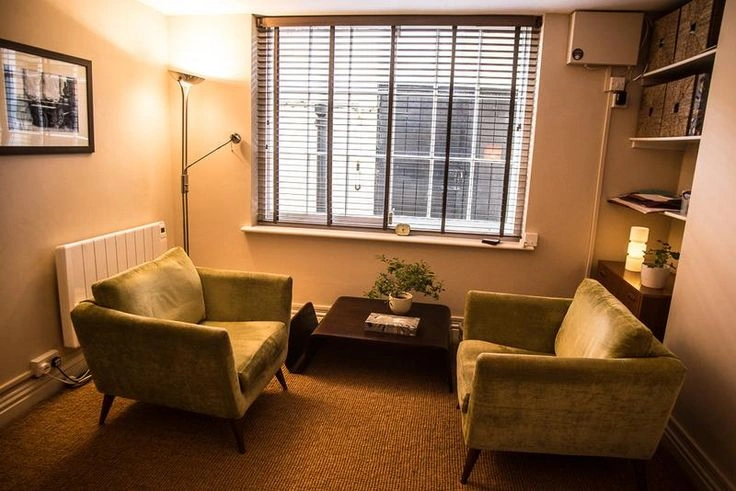
Finding the Right Therapist
Not every therapist is the right fit, and that’s completely normal. Here’s what to look for:
- Specialization matters. Look for someone who specifically works with parents, perinatal mental health, or anxiety disorders. A therapist who understands the unique pressures of parenthood will “get it” faster.
- Credentials to look for: Licensed Clinical Social Workers (LCSW), Licensed Professional Counselors (LPC), Licensed Marriage and Family Therapists (LMFT), or Psychologists (PsyD/PhD). All are qualified. The letters matter less than the fit.
- Use directories with filters. Psychology Today’s therapist finder, the Postpartum Support International directory, and your insurance provider’s search tool all let you filter by specialty.
- Most therapists offer a free 15-minute consultation. Use it. Ask them: “Have you worked with parents experiencing anxiety? What’s your approach?” You’ll know within minutes if the vibe feels right.
The First Session (The Intake)
Your first appointment is mostly about telling your story. The therapist will ask questions like:
- What brought you in today?
- How long have you been feeling this way?
- What does a typical day look like for you?
- What have you already tried?
- What’s your family and support situation like?
You will not be asked to lie on a couch. You will not be psychoanalyzed in a way that feels invasive. A good therapist will let you set the pace. If you cry, that’s completely fine. If you don’t, that’s also fine. There’s no wrong way to show up.
What you might feel after: Some people feel a rush of relief. Others feel emotionally drained. Some feel weirdly neutral. All of these responses are normal. It takes a few sessions for the work to really begin.
What Ongoing Sessions Look Like
After the initial intake, sessions typically settle into a rhythm. You’ll usually meet weekly or biweekly, for 45 to 50 minutes. Common therapy approaches for parental anxiety include:
- Cognitive Behavioral Therapy (CBT): Helps you identify the thought patterns fueling your anxiety and replace them with more accurate, balanced thinking. This is one of the most extensively researched treatments for anxiety disorders.
- Acceptance and Commitment Therapy (ACT): Focuses less on “fixing” anxious thoughts and more on changing your relationship with them so they have less power over your behavior.
- EMDR (Eye Movement Desensitization and Reprocessing): Particularly helpful if your parental anxiety is rooted in past trauma or a difficult birth experience.
- Somatic or body-based approaches: Directly address the physical symptoms and nervous system dysregulation that often accompany chronic anxiety.
Your therapist will likely blend approaches based on what you need. You are always allowed to ask why they’re using a particular technique and whether something else might work better.
How Long Does It Take?
There’s no universal timeline, but here’s a realistic picture:
- By sessions 3 to 5: You’ll likely start noticing patterns in your thinking that you hadn’t seen before. This awareness alone can feel like a turning point.
- By sessions 8 to 12: Many parents report a noticeable shift. Not that the anxiety is “gone,” but that it feels more manageable, less consuming, and less in control.
- Long-term: Some people benefit from ongoing therapy as maintenance. Others reach a point where they feel equipped to manage on their own and step back to “as needed” check-ins.
The goal of good therapy is never to make you dependent on it. It’s to give you tools, insight, and healing that you carry with you.
Practical Barriers (And How to Work Around Them)
Let’s be real. Knowing you should go to therapy and actually getting there are two very different things when you’re a parent.

“I can’t afford it.” Many therapists offer sliding scale fees. Community mental health centers provide low-cost services. Apps like Open Path Collective connect you with therapists at reduced rates ($30 to $80 per session). If you have insurance, call and ask specifically about outpatient mental health benefits.
“I don’t have time.” Teletherapy changed the game for parents. Many therapists now offer virtual sessions during nap times, lunch breaks, or after bedtime. You do not have to drive anywhere or arrange childcare.
“I don’t want to be medicated.” A therapist (unless they’re a psychiatrist or prescriber) cannot prescribe medication. Therapy is talk-based. If medication ever comes up as a recommendation, it will be a conversation, not a mandate, and you always have the final say.“My partner doesn’t believe in therapy.” You do not need anyone’s permission to take care of your mental health. This is your decision. If explaining it to your partner feels daunting, that’s a conversation worth having carefully and honestly, and your therapist can even help you navigate it.
Common Questions About Therapy for Parental Anxiety
How do I know if I need therapy or just better coping skills?
If your coping skills are helping you get through individual moments but the overall intensity and frequency of your anxiety hasn’t improved over several weeks or months, therapy can address the root patterns that self-help tools are managing on the surface. Think of it as the difference between mopping water off the floor and fixing the leaky pipe.
Can I go to therapy even if I’m not sure I have an anxiety disorder?
Absolutely. You do not need a formal diagnosis to start therapy. Many people begin simply because they’re struggling and want support. A therapist can help you understand what’s happening and whether it meets the criteria for a specific disorder, but that’s not a prerequisite for getting help. If you’re unsure where you fall, this guide on the difference between everyday stress and an anxiety disorder can help you sort it out.
Will a therapist judge me for my parenting?
No. A good therapist is trained to create a space free of judgment. They understand that the anxious thoughts you’re having do not define you as a parent. In fact, the fact that you’re seeking help is evidence of how much you care.
What if I try therapy and it doesn’t help?
Sometimes the first therapist isn’t the right match, and that’s not a reflection on you or on therapy itself. If after 3 to 4 sessions you don’t feel heard, understood, or comfortable, it is perfectly okay to try someone new. The relationship between you and your therapist is one of the strongest predictors of positive outcomes.
Is it normal to feel worse before feeling better?
It can happen, especially in the early sessions when you’re unpacking things you’ve been carrying silently. This is a normal part of the process, similar to how cleaning out a cluttered room makes it look messier before it looks better. A good therapist will help you pace yourself so it never feels unmanageable.
You Don’t Have to Figure This Out Alone

Here’s what I keep coming back to: the anxiety wants you to believe that asking for help is weakness, that you should be able to handle this on your own, that your struggles aren’t valid enough to warrant someone’s professional attention.
But what would you tell your best friend if she came to you, exhausted and worried and clearly carrying too much? You wouldn’t say, “Tough it out.” You’d say, “You deserve support. Please talk to someone.”
So consider this your gentle nudge to take your own advice.
Therapy is not an admission that you’ve failed at parenting. It’s one of the bravest, most self-aware decisions a parent can make. It’s you saying: I want to feel better, not just function. I want to be present, not just surviving. I want to break this pattern before it breaks me.
And that? That is the opposite of failure. That is the fiercest kind of love.






- Be Respectful
- Stay Relevant
- Stay Positive
- True Feedback
- Encourage Discussion
- Avoid Spamming
- No Fake News
- Don't Copy-Paste
- No Personal Attacks
- Be Respectful
- Stay Relevant
- Stay Positive
- True Feedback
- Encourage Discussion
- Avoid Spamming
- No Fake News
- Don't Copy-Paste
- No Personal Attacks
