How Does Trauma Affect a Child’s Developing Brain? What the Science Actually Says
Published: 9 May 2026
If a child in your life has been through something painful a loss, abuse, neglect, a frightening event, or years of instability you may be watching them struggle in ways that confuse and worry you. Explosive outbursts. Difficulty trusting. Trouble focusing at school. Clinging, or the opposite: pushing everyone away.
And you may be asking the hardest question of all: Did this hurt their brain?
The honest answer is yes but that is only half the story. The other half is more hopeful than most people realize.

First, What Do We Mean by “Childhood Trauma”?
Trauma is not just the dramatic, one-time events we tend to picture. For a child, trauma can be anything that overwhelms their ability to cope and leaves them feeling helpless, frightened, or alone.
Researchers use the term Adverse Childhood Experiences, or ACEs, to describe these events. The landmark ACE Study a collaboration between the CDC and Kaiser Permanente that surveyed more than 17,000 adults identified ten categories of adversity, including:
- Physical, emotional, or sexual abuse
- Neglect (physical or emotional)
- Growing up with a parent who struggles with addiction or mental illness
- Witnessing domestic violence
- Losing a caregiver through separation, divorce, or death
- Having a family member incarcerated
The study found that ACEs are far more common than most of us assume, and that the more ACEs a child experiences, the greater the impact on their long-term health and development. But understanding why requires a brief look inside the brain.
The Brain Is Literally Still Being Built
Here is the thing people sometimes forget: a child’s brain is not a small adult brain. It is a construction site.
At birth, a baby’s brain contains roughly 100 billion neurons almost all it will ever have. But the connections between those neurons (called synapses) are built through experience, almost entirely after birth. The first five years of life see an extraordinary burst of this wiring. By age three, a child’s brain has already formed around 1,000 trillion synaptic connections.
What does this mean for trauma? It means the experiences a child has during these early years do not just shape their personality they shape the actual physical architecture of their brain.
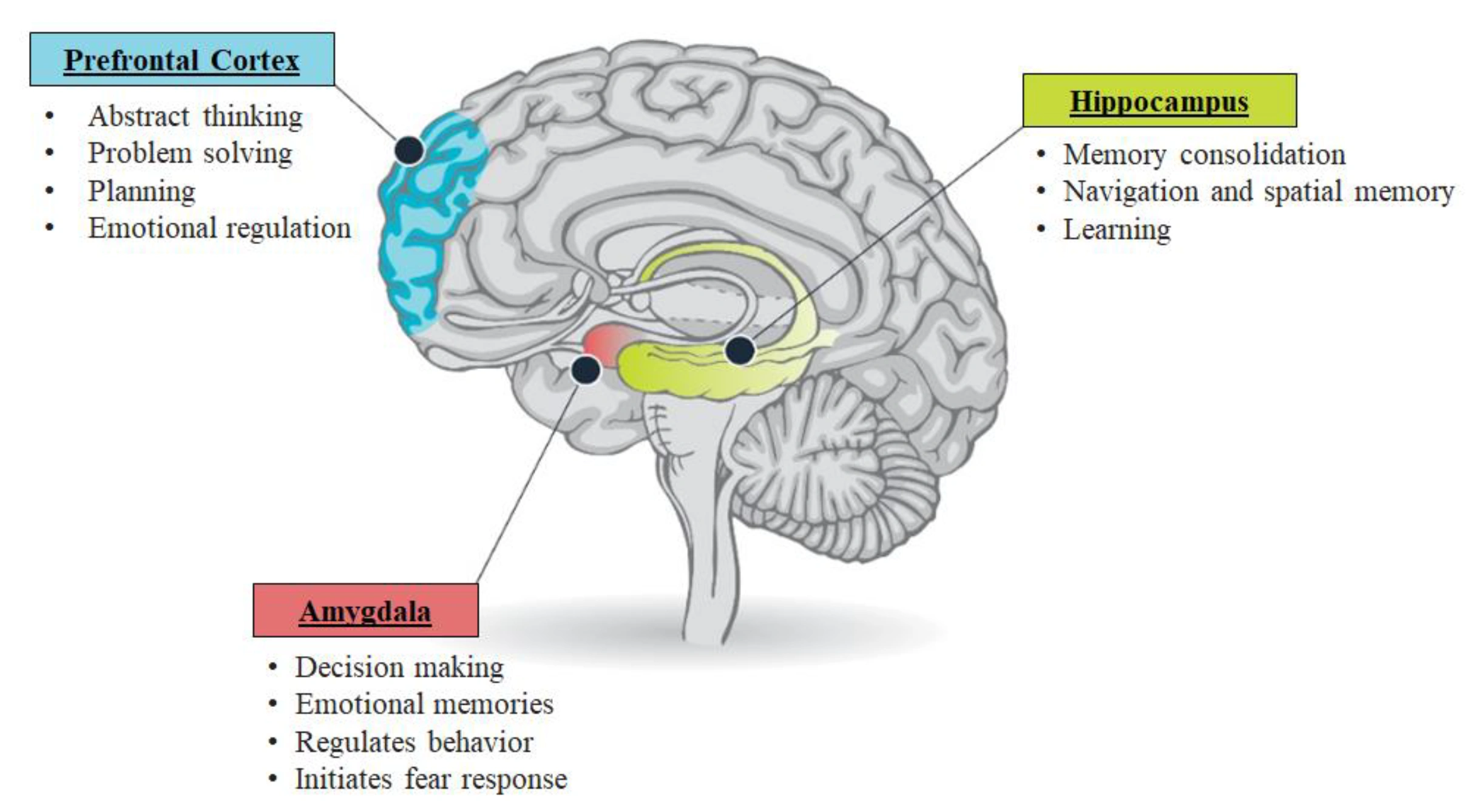
What Trauma Actually Does to a Child’s Brain
The Stress Response Goes Into Overdrive
Every brain has a built-in alarm system for danger. When we perceive a threat, the brain releases stress hormones like cortisol and adrenaline, which prepare the body to fight, flee, or freeze. This is completely normal and necessary for survival.
The problem with chronic childhood trauma is that this alarm system gets stuck in the “on” position. The brain begins to treat the world as a permanently dangerous place because, from its experience, it has been.
The Amygdala Grows Hyper-Alert
The amygdala is the brain’s threat-detection center small, almond-shaped, and lightning fast. In children who have experienced trauma, research consistently shows that the amygdala can become oversensitive. It starts flagging things that are not actually dangerous: a raised voice, an unfamiliar face, an unexpected change in routine.
Read also: How to Teach Empathy: A Guide for Raising Emotionally Intelligent Kids
This is why a traumatized child may seem to “overreact” to small things. They are not being dramatic. Their brain is genuinely sounding the alarm.
The Prefrontal Cortex Gets Left Behind
Here is where it gets particularly important for caregivers to understand. The prefrontal cortex is the brain region responsible for rational thinking, impulse control, empathy, and decision-making. It is also the last part of the brain to fully develop (not fully mature until the mid-twenties).
Under chronic stress, the body diverts energy and resources toward the amygdala (survival) and away from the prefrontal cortex (thinking). Over time, this imbalance can affect how these regions develop and connect.
This is why traumatized children often struggle to regulate their emotions, think through consequences, or respond to calm logic in the middle of a meltdown. Their brain is literally in a different operating mode.
The Hippocampus and Memory
The hippocampus plays a central role in forming and organizing memories. Studies have shown that prolonged exposure to high levels of cortisol can impair hippocampal function and even reduce its volume in children who have experienced significant adversity.
This helps explain why some children have fragmented, confusing, or overwhelming memories of traumatic events and why some seem to re-experience them suddenly, through triggers they cannot always name.
Borrowed Expertise: Dr. Bruce Perry and the “Three Rs”
No one has done more to translate childhood trauma neuroscience into practical, human language than Dr. Bruce Perry, a psychiatrist and senior fellow of the ChildTrauma Academy, and co-author (with Oprah Winfrey) of the bestselling book What Happened to You?
Dr. Perry’s foundational insight is deceptively simple: you cannot reason with a brain that is in survival mode. When a child is in a state of fear or high stress, the upper, thinking parts of their brain are essentially offline. Logic, conversation, and discipline do not reach them in that moment.
His framework for supporting traumatized children is built on three sequential steps: Regulate, Relate, Reason and crucially, in that order.
- Regulate first: Help the child’s nervous system calm down. This means co-regulation a calm, present adult using their own regulated nervous system to soothe the child’s. Think steady voice, slow breathing, rhythmic movement, a gentle hand (if welcome).
- Relate second: Once the child is calmer, focus on connection, not correction. Make eye contact. Acknowledge their feeling. “I can see that was really scary.”
- Reason third: Only now when the child’s prefrontal cortex is back online is it useful to talk through what happened, set a boundary, or problem-solve together.
Dr. Perry’s work is a reminder that what looks like defiance or manipulation in a traumatized child is almost always a survival response. Changing the behavior means first addressing the brain state underneath it.
You might also want to explore the research of Dr. Nadine Burke Harris, former Surgeon General of California, whose TED Talk “How Childhood Trauma Affects Health Across a Lifetime” has been viewed millions of times and remains one of the clearest public explanations of the ACE study’s findings.

What Does Trauma Look Like in Children? (Signs by Age)
Trauma does not always look like what we expect. It rarely announces itself with a label. Here is what caregivers often see instead:
In babies and toddlers (0-3):
- Excessive crying or difficulty being soothed
- Regression to earlier behaviors (bedwetting, thumb-sucking)
- Heightened startle response
- Feeding and sleep difficulties
- Clingy behavior or, conversely, emotional withdrawal
In preschoolers (3-5):
- Re-enacting traumatic events in play
- Fear of being separated from caregivers
- New fears, nightmares, or sleep problems
- Aggressive behavior or emotional outbursts that seem disproportionate
- Difficulty with transitions or changes in routine
Read also: The Parent’s Guide to Social Development Milestones (Ages 1-5)
In school-age children (6-12):
- Difficulty concentrating or learning at school
- Hypervigilance always seeming “on edge” or watching for danger
- Somatic complaints (stomachaches, headaches) with no medical cause
- Withdrawal from friends or activities they used to enjoy
- Shame and self-blame
Does this mean every child showing these signs has experienced trauma? No. But if you see a cluster of these behaviors especially following a known difficult event it is worth paying attention.
The Most Hopeful Part: Neuroplasticity
Now for the part of this conversation that does not get talked about nearly enough.
The same quality that makes young brains so vulnerable to trauma also makes them extraordinarily capable of healing. That quality is neuroplasticity the brain’s ability to change, adapt, and form new connections throughout life.
Research consistently shows that the brain, especially in childhood, can build new pathways. Traumatic experiences are not destiny. Children who receive consistent, responsive, and nurturing care even after significant adversity show measurable improvements in brain function, behavior, and emotional regulation.
The single most powerful protective factor? A stable, safe relationship with at least one caring adult. Not perfection. Not therapy (though therapy absolutely helps). Just one reliable person who shows up, who is warm, who is predictable.
You might be that person for a child. And that matters more than you know.
What Caregivers Can Actually Do
You do not need to be a therapist to make a difference. Here are evidence-backed starting points:
Create predictability. Traumatized brains crave routine because chaos is what they associate with danger. Consistent meal times, bedtimes, and transitions are deeply regulating.
Respond, do not react. When a child is dysregulated, your calm is the intervention. Taking a breath before you respond models exactly the skill you want them to build.
Read Also: How Your Home Environment Shapes Your Child’s Development
Name feelings without judgment. “It sounds like you felt really scared when that happened.” You are helping wire the child’s brain to connect experience, emotion, and language a skill that was disrupted by trauma.
Seek professional support. Trauma-informed therapists, particularly those trained in approaches like Trauma-Focused CBT (TF-CBT) or EMDR for children, can provide targeted support. Your child’s pediatrician is a good first call.Take care of yourself. You cannot co-regulate a child from an empty cup. Caregiver support matters too.

Common Questions
Can a baby be traumatized?
Yes. Even very young infants are sensitive to the emotional environment around them and to experiences of pain, abandonment, or neglect. Early relational trauma (disruption in the caregiver bond) is considered among the most impactful forms of childhood adversity
How long do the effects of childhood trauma last?
Without intervention, the effects can persist into adulthood the ACE Study demonstrated this clearly. But intervention at any point can change the trajectory. The brain retains neuroplasticity throughout life.
Is my child permanently damaged?
This is the question every worried parent is really asking. The honest answer is: no. Brains change. People heal. It takes time, consistency, and often professional support but change is real and well-documented
How do I talk to my child about what happened?
Follow the child’s lead. Use age-appropriate language. Validate their feelings without pressing for details they are not ready to share. A trauma-informed therapist can guide this conversation in a safe, structured way.
What is “toxic stress” and is it the same as trauma?
Toxic stress refers to prolonged, severe stress without adequate adult support the kind that activates the stress response system in ways that are harmful to development. It is closely related to but not identical to trauma. All traumatic experiences can cause toxic stress, but not all toxic stress comes from a single traumatic event.
A Final Word
If you searched for this topic, chances are you love a child who is hurting. And you are trying to understand them better. That instinct that desire to understand rather than just react is already one of the most powerful things a caregiver can bring.
The science is clear that trauma changes the brain. But the science is equally clear that safe, responsive, loving care changes it back. Slowly, imperfectly, but genuinely.
You are not powerless here. You may be, for this child, the very thing that makes the difference.






- Be Respectful
- Stay Relevant
- Stay Positive
- True Feedback
- Encourage Discussion
- Avoid Spamming
- No Fake News
- Don't Copy-Paste
- No Personal Attacks
- Be Respectful
- Stay Relevant
- Stay Positive
- True Feedback
- Encourage Discussion
- Avoid Spamming
- No Fake News
- Don't Copy-Paste
- No Personal Attacks
