7 Stages of Child Development: A Parent’s Simple Guide to Growing Years
Published: 26 Oct 2025
Watching your child grow is amazing, right? One day they can barely lift their head, and before you know it, they’re running around asking endless questions.
But here’s something most parents don’t realize: childhood isn’t one long phase. Kids move through several stages, each with its own milestones and challenges. Understanding these 7 stages of child development helps you know what’s coming next and how to guide your child through every step.
Let’s break it down clearly and simply.
What Are the 7 Stages of Child Development?
Experts divide childhood into seven key stages that most kids pass through on their way to adulthood. These stages cover physical growth, emotions, learning, and social skills.
Every child develops at their own pace. Some reach milestones early, others take their time, and that’s completely fine. Think of these stages as a flexible roadmap, not a rulebook.
Stage 1: Infancy (Birth to 18 Months)
This is the beginning of everything. Babies learn about the world through their senses, touch, taste, sight, and sound.
What Happens
Your baby’s brain grows rapidly. They start recognizing faces, developing trust, and learning to move by rolling over, sitting, and eventually crawling or walking.
What You Can Do
Respond quickly to their needs. Hold them, talk to them, and maintain eye contact. These small actions create a strong emotional bond that shapes their sense of security.
Even simple moments like reading, singing, or playing peekaboo support brain growth and language development.
Stage 2: Toddlerhood (18 Months to 3 Years)
Welcome to the “I’ll do it myself” phase. Toddlers are discovering independence and testing boundaries.
What Happens
Language skills grow rapidly. They begin forming short sentences, understanding more, and yes, showing big emotions when frustrated. Physical coordination improves too, they climb, run, and explore everything.
What You Can Do
Patience is key. Set gentle but clear boundaries and offer small choices, like “red cup or blue cup.” It gives them a sense of control.
Remember, tantrums aren’t manipulation. Their brains are still learning how to manage strong emotions.
Stage 3: Early Childhood (3 to 6 Years)
This is the preschool stage. Kids are becoming social, curious, and imaginative.
What Happens
Their creativity explodes. They love pretend play, storytelling, and inventing new worlds. These activities help them understand real-life experiences and emotions.
Fine motor skills also grow stronger, so they can draw, use scissors, and begin writing letters.
What You Can Do
Encourage creativity and curiosity. Join their games, answer questions, and keep routines consistent. Children at this age thrive on structure mixed with playful freedom.
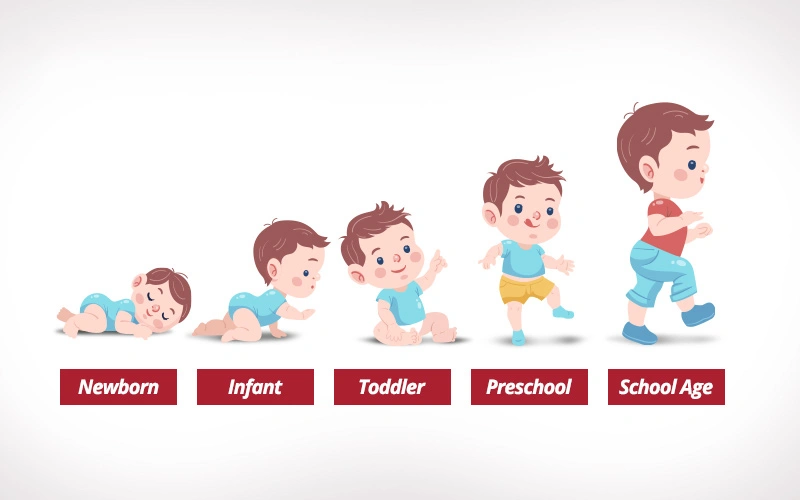
Stage 4: Middle Childhood (6 to 12 Years)
School becomes the center of life now. Kids develop new skills, friendships, and self-identity.
What Happens
They start thinking logically, understanding cause and effect, and forming opinions. Friendships matter deeply, and fitting in with peers becomes important.
What You Can Do
Stay involved but allow independence. Ask about their day, meet their friends, and keep communication open.
This is when self-esteem can rise or fall quickly. Focus on effort, not just outcomes, and remind them they’re valued for who they are.
Stage 5: Early Adolescence (12 to 15 Years)
The teenage years begin, filled with emotions, questions, and rapid change.
What Happens
Hormones shift, bodies grow, and the brain starts rewiring. Teens begin to think more deeply, challenge rules, and rely more on friends than family.
What You Can Do
Stay calm and don’t take their moods personally. Keep talking, even when they seem uninterested. Set boundaries but respect their need for space.
Be available, because even when they act distant, they still need your presence and understanding.
Stage 6: Late Adolescence (15 to 18 Years)
These are the high school years when your teen starts shaping their identity and thinking about the future.
What Happens
They develop clearer values, beliefs, and goals. Academic pressure and social life both intensify. They can now think ahead, but emotional regulation still takes practice.
What You Can Do
Guide rather than control. Let them make decisions and learn from the results. Discuss real-world topics like relationships, finances, and mental health.
Stay connected and supportive. They might act independent, but your reassurance still means a lot.
Stage 7: Young Adulthood (18 to 25 Years)
Your child is technically an adult, but they’re still learning how to navigate the world.
What Happens
This stage involves major life choices, education, career, and relationships. The brain continues to mature, especially in planning and impulse control.
What You Can Do
Transition from parent to mentor. Offer advice when asked and trust them to handle more responsibility. Be a safe space when life feels overwhelming.
Your support gives them the confidence to stand on their own while knowing they’re never alone.

Why Understanding These Stages Matters
Knowing what’s typical at each stage helps you worry less about whether your child is “on track.” It also makes it easier to respond with patience and understanding instead of frustration.
Most challenging behaviors are signs of growth, not defiance. When you understand the stage your child is in, you can parent with empathy and confidence.
Quick Tips for Supporting Development at Every Stage
- Be present. Quality time beats screen time.
- Listen before you lecture. Kids need to feel heard.
- Encourage exploration. Let them try, fail, and learn.
- Keep routines steady. Predictability builds security.
- Take care of yourself. A calm parent raises calm kids.
Wrapping It Up
The 7 stages of child development offer a helpful way to understand your child’s growth from birth to young adulthood. Each phase brings joy, learning, and a few challenges.
Perfect parenting doesn’t exist. What truly matters is showing up, staying patient, and giving your child love and guidance through every step.
Your child doesn’t need perfection, they just need you.






- Be Respectful
- Stay Relevant
- Stay Positive
- True Feedback
- Encourage Discussion
- Avoid Spamming
- No Fake News
- Don't Copy-Paste
- No Personal Attacks
- Be Respectful
- Stay Relevant
- Stay Positive
- True Feedback
- Encourage Discussion
- Avoid Spamming
- No Fake News
- Don't Copy-Paste
- No Personal Attacks
