The ‘Analog Childhood’ Movement: Why Parents Are Bringing Back the 90s
Published: 30 Mar 2026
If you grew up in the 80s or 90s, your childhood probably had a soundtrack. Bike chains clicking. Screen doors slamming. Somebody’s mom yelling that dinner was ready from three houses down.
Nobody scheduled your playdates. Nobody tracked your location. You left the house after breakfast, came home when the streetlights flickered on, and somewhere in between, you built forts, caught frogs, got bored, and figured things out.
Now, as a parent yourself, you’re watching your kid scroll through a tablet with glassy eyes, and something in your gut whispers: this isn’t it.
You’re not alone. That gut feeling has sparked a genuine cultural shift. It’s called the analog childhood movement, and it’s growing fast. Not because parents are anti-technology, but because they’re pro-childhood. And increasingly, the science is backing them up.
So what does an analog childhood actually look like in 2026? Is it realistic, or just nostalgia in a cute Instagram filter? Let’s get into it.
What Exactly Is an “Analog Childhood”?
At its core, the analog childhood movement is about intentionally reducing the role of screens and digital devices in a child’s daily life, and replacing that time with hands-on, real-world experiences.
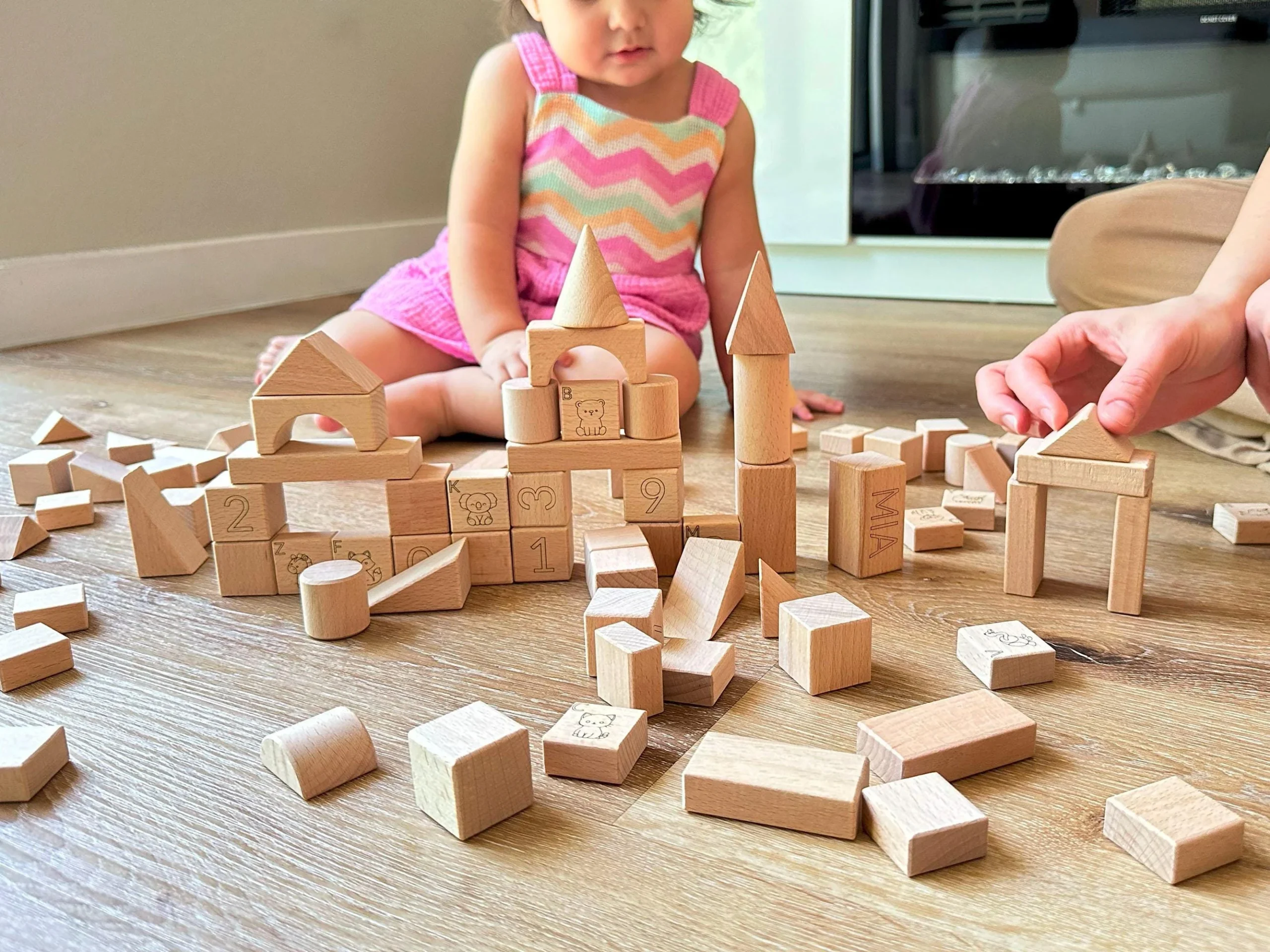
Think: building with actual blocks instead of virtual ones. Playing in the mud instead of watching someone else play in the mud on YouTube Kids. Reading paper books. Drawing with crayons. Getting bored and then, crucially, doing something about that boredom.
It doesn’t mean throwing every device into the ocean. Most families practicing this aren’t living off-grid or banning electricity. They’re simply making a conscious choice to let low-tech play, outdoor exploration, and unstructured free time take center stage during the childhood years.
The term “analog” is borrowed from the tech world itself. Analog signals are continuous, natural, uncompressed. Digital signals are processed and packaged. The metaphor works beautifully: an analog childhood is about giving kids the raw, unprocessed, full-sensory experience of being a kid.
The Research That Changed the Conversation
If the analog childhood movement has a founding document, it might be Dr. Jonathan Haidt’s 2024 book The Anxious Generation: How the Great Rewiring of Childhood Is Causing an Epidemic of Mental Illness.

Haidt, a social psychologist at New York University, spent years analyzing data on teen and preteen mental health. His central argument is both simple and alarming: beginning around 2010 to 2015, when smartphones and social media became standard-issue for young people, rates of anxiety, depression, self-harm, and loneliness among adolescents spiked dramatically. Not a gentle uptick. A sharp, visible bend in the curve.
But Haidt’s work goes beyond just blaming phones. He identifies two connected trends that happened simultaneously:
- The decline of free, unsupervised play (what he calls a “play-based childhood”).
- The rise of a “phone-based childhood” that replaced it.
Kids didn’t just gain screens. They lost something at the same time: the chance to take small risks, resolve conflicts with peers face-to-face, tolerate boredom, and develop independence through real-world trial and error. These aren’t luxuries. According to Haidt and a growing body of developmental research, they are requirements for healthy emotional and cognitive growth.
What makes Haidt’s work resonate with so many parents is that he’s not wagging a finger. He’s describing what millions of families already feel. And he offers a clear path forward, one built on four foundational reforms: more free play, fewer smartphones in early years, phone-free schools, and more real-world independence.
The American Psychological Association has since issued its own health advisory on social media use by young people, echoing many of these concerns. This isn’t fringe thinking anymore. It’s mainstream developmental science.
What an Analog Childhood Looks Like Day to Day
Here’s where things get practical. Because “give your kids an analog childhood” sounds lovely in theory, but what does a Tuesday afternoon actually look like?
Families who embrace this approach tend to share a few common rhythms:
Mornings Start Slow, Without Screens
Instead of handing over a tablet while you make coffee, kids might flip through picture books, play with toys on the floor, or simply hang around the kitchen while breakfast happens. Yes, it’s louder. Yes, it’s slower. But it sets a different tone for the whole day.
Unstructured Outdoor Time Is Non-Negotiable
Rain or shine, kids get outside. Not for an organized sport or a structured activity, but just to be outside. Digging in dirt. Climbing things. Watching ants. This kind of free, outdoor play is linked to stronger gross motor skill development and better emotional regulation.
Boredom Is Welcome
This one is hard for modern parents. When your child says “I’m bored,” every instinct tells you to fix it. But developmental experts consistently point to boredom as the birthplace of creativity. A bored child who isn’t handed a device will eventually pick up sticks, invent a game, draw something weird, or start a conversation. That process of generating their own entertainment is where problem-solving skills really develop.
Hands-On Play Replaces Passive Consumption
Think puzzles, art supplies, building sets, dress-up bins, sensory bins for younger kids, cooking together, card games, and open-ended toys. Activities that require a child to use their hands and their imagination at the same time are incredibly powerful for brain development. Even simple fine motor activities with household items can be more developmentally rich than the most expensive educational app.
Social Time Happens Face to Face
Playdates, neighborhood wandering, sibling negotiation, learning to share a swing. These real-time social interactions are where kids build empathy, learn to read body language, and practice the social skills they’ll need for the rest of their lives.
How to Start (Without Overhauling Your Entire Life)
Here’s the honest truth: going fully “analog” overnight is unrealistic for most families, and attempting it often leads to burnout and guilt. The parents who make this work tend to take a gradual, forgiving approach.
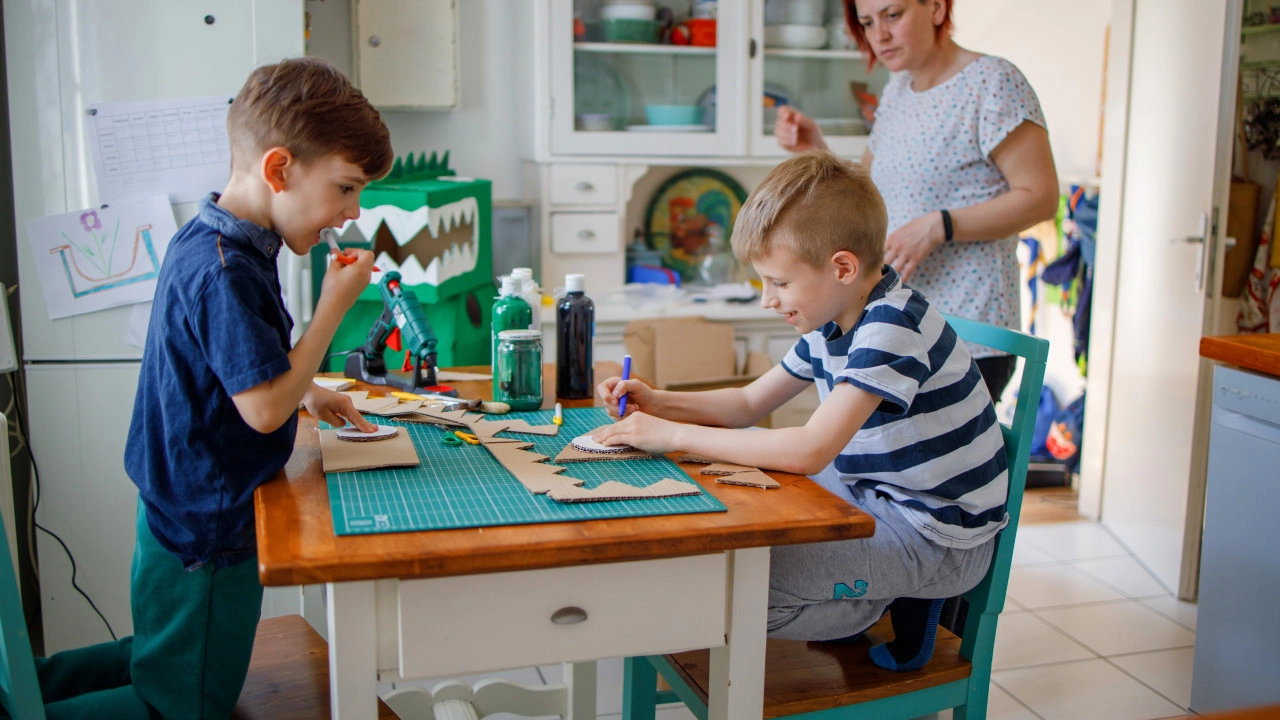
Start with one screen-free window each day. Maybe it’s the first hour after school, or the two hours before bed. Protect that window and fill it with available, low-tech options. Stock a shelf with art supplies. Put a basket of books by the couch. Leave building toys out and accessible.
Rethink your home environment. Where screens live in your house matters. Moving the TV out of the playroom, keeping tablets in a central location rather than bedrooms, and making books and art supplies more visible than devices can quietly reshape daily habits. Your home environment shapes development more than most parents realize.
Create a “boredom box.” Fill a box or basket with activity cards, craft supplies, simple science experiments, and prompts. When your child says they’re bored, point them to the box instead of the remote. After a few weeks, most kids stop needing the box and start generating ideas on their own.
Talk to other parents. One of the hardest parts of reducing screen time is feeling like your kid is the only one without a phone or unlimited tablet access. The analog childhood movement has sparked parent pacts in communities across the country, where families agree together to delay smartphones and prioritize offline play. There’s real strength in numbers here.
Give yourself grace on the hard days. Sometimes the toddler watches two episodes of Bluey while you take a work call. That’s okay. An analog childhood isn’t about perfection or purity. It’s about the overall direction you’re heading.
But What About Educational Screens?
This is the question every parent asks, and it’s a fair one. Don’t some apps and programs teach valuable skills?
They can. High-quality, interactive educational content is not the same as passive scrolling or autoplay rabbit holes. The key distinction that researchers like Haidt emphasize is between active, intentional use and passive, endless consumption.
A child sitting with a parent, working through a reading app together for 20 minutes? That’s a tool. A child alone with a tablet for three hours, bouncing between random YouTube videos? That’s a replacement for childhood.
The analog childhood approach doesn’t require you to pretend technology doesn’t exist. It asks you to keep it in its place: as a small, supervised tool rather than the default activity.
Why This Movement Keeps Growing
Something about the analog childhood idea has clearly struck a nerve. Parent communities on Reddit, local Facebook groups, and even school boards are buzzing with conversations about phone-free childhoods and play-based learning.
Part of it is nostalgia, sure. But the bigger driver is that parents are watching, in real time, the effects of a phone-based childhood on older kids and teens. They’re seeing the anxiety, the comparison loops, the shortened attention spans, and the social struggles. And they’re deciding, for their younger children, to try a different path.
It also helps that the research keeps piling up. Studies on language development consistently show that back-and-forth conversation and real-world interaction are far more powerful for building communication skills than any screen-based program. Research on cognitive development in toddlers points to hands-on, exploratory play as the single best way young brains learn.
The analog childhood movement isn’t a rejection of the future. It’s a reclaiming of something we almost lost: the slow, messy, sometimes boring, deeply formative experience of just being a kid.
Common Questions About the Analog Childhood
Is the analog childhood movement anti-technology?
Not at all. Most families who practice it use technology themselves and plan to introduce it to their children eventually. The focus is on delaying heavy screen exposure during the critical early years of brain development and making sure real-world play remains the primary activity of childhood.
What age should I start limiting screens?
The American Academy of Pediatrics recommends avoiding screen media (other than video calls) for children under 18 to 24 months, and limiting use to one hour per day of high-quality content for children ages 2 to 5. Many analog childhood advocates extend lower screen time well beyond age 5, especially for social media and smartphones.
My child is already very attached to screens. How do I pull back?
Gradually. Cold-turkey approaches tend to create power struggles. Start by introducing one screen-free period per day and filling it with appealing alternatives. Over a few weeks, expand that window. Expect some pushback at first, and know that it typically fades faster than parents expect.
Does this mean I can never use a screen as a babysitter?
Let’s be real: every parent has moments where a screen buys 30 minutes of peace so you can cook dinner or take a breath. The analog childhood philosophy is about the pattern of daily life, not about achieving some impossible standard of screen-free purity.
How do I handle other families who have different screen rules?
This is genuinely tricky, especially as kids get older. Honest, non-judgmental conversations with other parents help. So do those community parent pacts where families agree on shared guidelines together.

The Childhood They’ll Remember
Here’s something worth sitting with for a moment. When you think back on your own childhood, what do you remember most?
Chances are, it’s not the TV shows. It’s the feeling of grass under your feet. The friend who lived down the street. The rainy afternoon you spent building something ridiculous out of cardboard boxes. The time you got lost in a book for so long the light changed in your room.
Those memories weren’t produced by an algorithm. They were produced by time, space, and the freedom to just be.
That’s what the analog childhood movement is really about. Not a set of rigid rules. Not a rejection of the modern world. Just a quiet, determined effort to make sure your kids get the same gift you got: a childhood they can feel in their bones.
And honestly? Giving them that might be one of the most important things you ever do.






- Be Respectful
- Stay Relevant
- Stay Positive
- True Feedback
- Encourage Discussion
- Avoid Spamming
- No Fake News
- Don't Copy-Paste
- No Personal Attacks
- Be Respectful
- Stay Relevant
- Stay Positive
- True Feedback
- Encourage Discussion
- Avoid Spamming
- No Fake News
- Don't Copy-Paste
- No Personal Attacks
