How Your Home Environment Actually Shapes Your Child’s Development
Published: 20 Mar 2026
We have all been there. You scroll through social media and see a pristine, beige playroom with wooden toys perfectly aligned on low shelves. Then, you look up at your own living room. There is a pile of laundry on the couch, plastic toys scattered like landmines, and the TV is blaring in the background.
It is easy to panic. You might wonder, Is this chaos hurting my child? Does my home need to look like a preschool for them to learn?
I have good news for you.
When psychologists and scientists talk about how your home environment shapes your child’s development, they are rarely talking about how expensive your furniture is or whether your color scheme is coordinated. They are talking about the “invisible environment.”
Let’s dig into what actually matters, backed by some fascinating research, so you can stop stressing about the mess and start focusing on the magic.
What Do We Mean by “Home Environment”?
If we want to understand how our homes influence our kids, we have to look at the big picture.
Think of your home as an ecosystem. It is not just four walls and a roof. It includes the noise levels, the emotional temperature, the routines you keep, and the way people inside the home talk to each other.
To help us understand this, we can borrow a concept from a giant in the field of child psychology.
The “Borrowed Expertise”: Urie Bronfenbrenner
Decades ago, a psychologist named Urie Bronfenbrenner developed something called the Ecological Systems Theory. That sounds complicated, but the core idea is simple and beautiful.
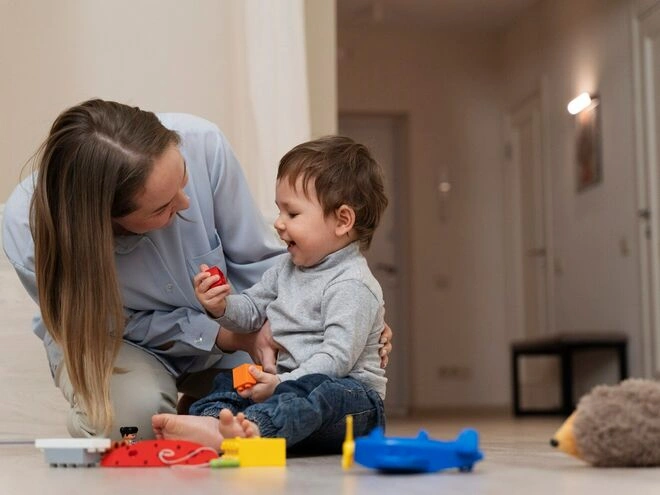
Bronfenbrenner argued that a child does not grow in a vacuum. They grow within a series of nested environments, like a set of Russian dolls. The center of that system’s most influential layer is what he called the Microsystem.
For most young children, the Microsystem is the home.
According to Bronfenbrenner, the most critical factor in this environment is not the things in it, but the interactions that happen within it. It is about the “serve and return” relationship between the parent and the child.
So, when we ask how the home environment shapes development, we are really asking: Does your home facilitate positive interactions, or does it block them?
The 3 Pillars of a Developmental Home
Based on this expert framework, we can break the home environment down into three manageable pillars. You do not need a bigger house to improve these. You just need a shift in perspective.
1. The Physical Environment (It’s Not About Being Tidy)
Yes, physical space matters, but perhaps not in the way you think. A study by researchers at Cornell University, led by environmental psychologist Gary Evans, looked specifically at “household chaos.”
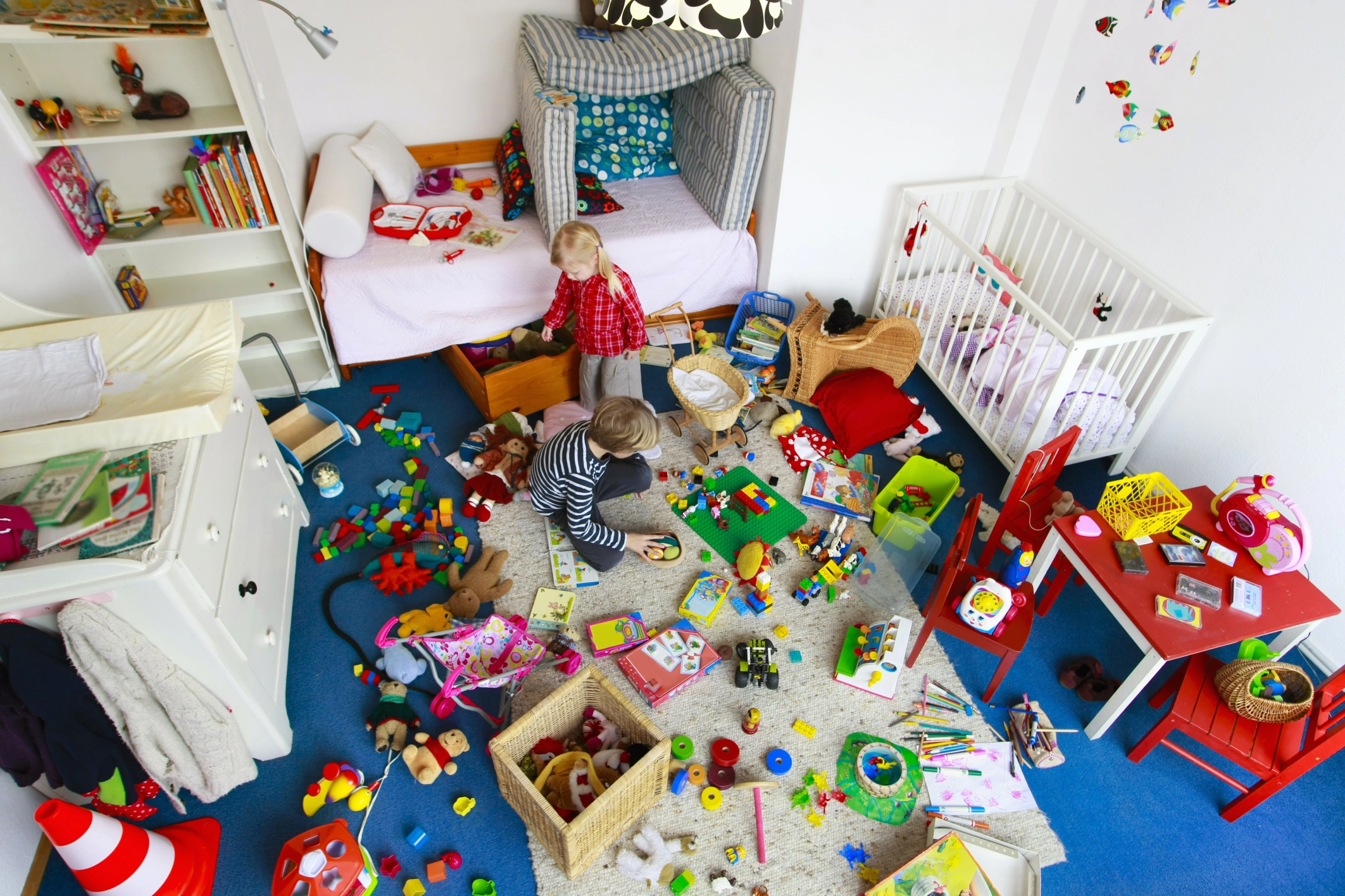
They found that overcrowding and high noise levels were linked to lower cognitive competence and more behavioral issues.
Why? Because constant background noise (like a TV always on) or visual chaos makes it hard for a child to focus. Their little brains have to work overtime just to filter out the distractions.
Quick Win: You do not need to become a minimalist. Just try to create “quiet zones.” Can you turn the TV off during play sessions? Can you rotate toys so only a few are out at a time? This lowers the visual volume of the room.
(If you are looking for ways to engage your child without a mountain of plastic toys, check out these 10 Fun Games That Boost a Toddler’s Cognitive Development).
2. The Predictable Environment (Routines)
Children crave predictability. When a child knows what to expect, their nervous system relaxes. They do not have to waste energy worrying about what comes next, so they can use that energy to learn and grow.
A chaotic home environment isn’t usually about mess; it is about unpredictability. If meal times, sleep times, and reactions from parents are always different, the child remains in a state of high alert.
Quick Win: Anchor your day with small rituals. A simple morning song or a specific bedtime book sequence counts as a strong environmental cue.
3. The Emotional Environment (The “Vibe”)
This is the most important one. You could live in a mansion filled with educational toys, but if the emotional climate is cold or frightening, development will stall. Conversely, you could live in a tiny apartment, but if the emotional climate is warm and responsive, your child can thrive.
This connects directly to the 5 Main Areas of Child Development. Your home’s emotional safety is the foundation for social, emotional, and even cognitive growth. When a child feels safe, their brain is open to learning.
How the Environment Impacts Specific Skills
Let’s look at how your home setup directly influences different areas of your child’s growth.
Language Development
Your home is a language lab. The “30 Million Word Gap” research famously showed that the sheer number of words a child hears correlates with their future success.
But it is not just about the number of words. It is about conversational turns. Does your home environment encourage chatting?
- The Barrier: Loud background noise or parents constantly on screens.
- The Booster: Narration. Talk about what you are doing as you cook or clean.
(Worried your little one isn’t chatting enough yet? Read our guide on Is My Toddler a “Late Talker”? Signs and Strategies to Help).
Motor Skills
Your furniture layout actually dictates how your child moves. If a room is packed so tight that a child is constantly told “sit down” or “don’t touch that,” their gross motor skills may lag.
You want a “Yes Space” an area where they can move freely without hearing “no.”
- The Barrier: A living room full of breakable items on low tables.
- The Booster: Clearing a floor space for climbing, dancing, or building.
(Read more on Why Is Gross Motor Skill Development So Important? to understand why they need this space).
Social and Emotional Growth
Your home is where your child learns how to handle big feelings. If the household culture is one where emotions are punished or ignored, the child learns to suppress them. If the culture is one of empathy, they develop emotional intelligence.(This is a deep topic, but you can learn the basics in our article on How to Teach Empathy: A Guide for Raising Emotionally Intelligent Kids).
Common Questions About Home Environments
I live in a small apartment. Is my child at a disadvantage?
Absolutely not. Proximity can actually be a benefit! It promotes more interaction. The key in small spaces is vertical organization (shelves) to reduce clutter on the floor, giving your child room to play.
Do I need educational posters on the walls?
No. In fact, too many bright colors and posters can overstimulate young children. A calm, neutral visual environment is often better for concentration.
My house is loud because I have a big family. Is that bad?
Not necessarily. Happy noise is different from stressful noise. If the noise comes from laughter and playing, that is social stimulation. If the noise is yelling or constant competitive media, that creates stress.
How does our family culture fit in?
Your family’s values, food, and traditions are a huge part of the environment. This “micro-culture” gives your child a sense of identity. (We explore this deeply in our post: How Culture Affects Child Development: What Parents Should Know).
Making Changes: Start Small
You do not need to overhaul your entire life this weekend. Remember Bronfenbrenner’s theory: it is about the interactions.
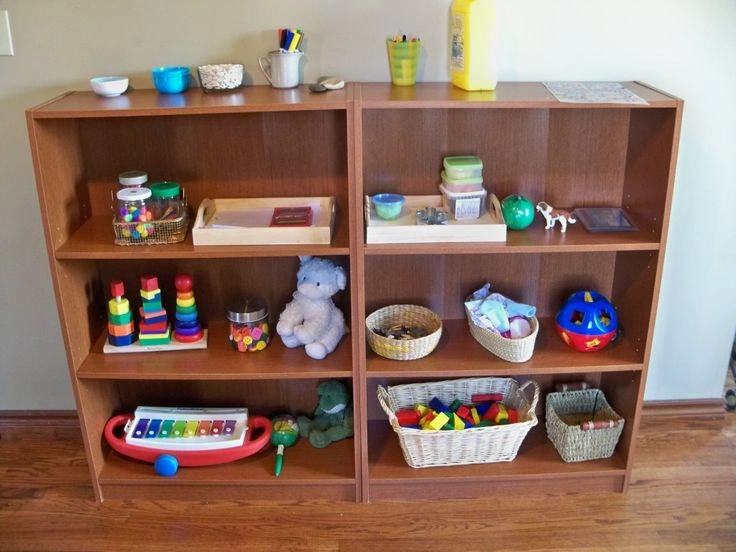
If you want to improve your home environment today, try this:
- Lower the noise. Turn off the TV for two hours.
- Clear one shelf. Put away half the toys so the remaining ones are visible and inviting.
- Sit on the floor. Changing your physical level changes how you interact with your child.
Your home does not need to be perfect. It just needs to be a place where your child feels seen, heard, and safe. That is the environment where growth happens.

Setting Boundaries with Family: How to Protect Your Mental Health Without Losing the People You Love





- Be Respectful
- Stay Relevant
- Stay Positive
- True Feedback
- Encourage Discussion
- Avoid Spamming
- No Fake News
- Don't Copy-Paste
- No Personal Attacks
- Be Respectful
- Stay Relevant
- Stay Positive
- True Feedback
- Encourage Discussion
- Avoid Spamming
- No Fake News
- Don't Copy-Paste
- No Personal Attacks
